For attorneys, a useful background check begins with the legal question it must answer. Elite Investigations helps define whether a focused background investigation is appropriate or whether the matter requires witness interviews, asset searches, surveillance, or another investigative service.
What legal question should a background investigation answer?
A background investigation should answer a defined case question, such as whether a person’s identity is accurate, whether a witness can be located, whether credibility concerns require further review, or whether a subject’s relationships, assets, or history matter to the legal issue.
The phrase “background check” can describe very different levels of work. A focused records review may establish identity details and relevant public-record information. A broader investigation may require interviews, fieldwork, address research, or coordination across jurisdictions. Treating every request as the same package can leave important factual gaps or produce information that does not help counsel decide.
We recommend defining the scope around the subject, the case objective, the relevant time period, the geographic area, and the decision the findings must support. Before requesting work, clarify:
Subject identity: What names, aliases, birth information, addresses, employers, or other identifiers are known?
Legal purpose: Is the investigation supporting litigation preparation, credibility assessment, due diligence, a civil matter, or a criminal matter?
Known information: Which facts have already been verified, and which are assumptions or unconfirmed leads?
Deadline: When must counsel receive findings, and are there hearing, filing, deposition, or trial dates?
Geographic scope: Which Montana or Wyoming counties, communities, courts, agencies, or prior addresses may be relevant?
Unresolved questions: What specific fact would change the next legal or strategic decision?
Which background check method fits the facts your case requires?
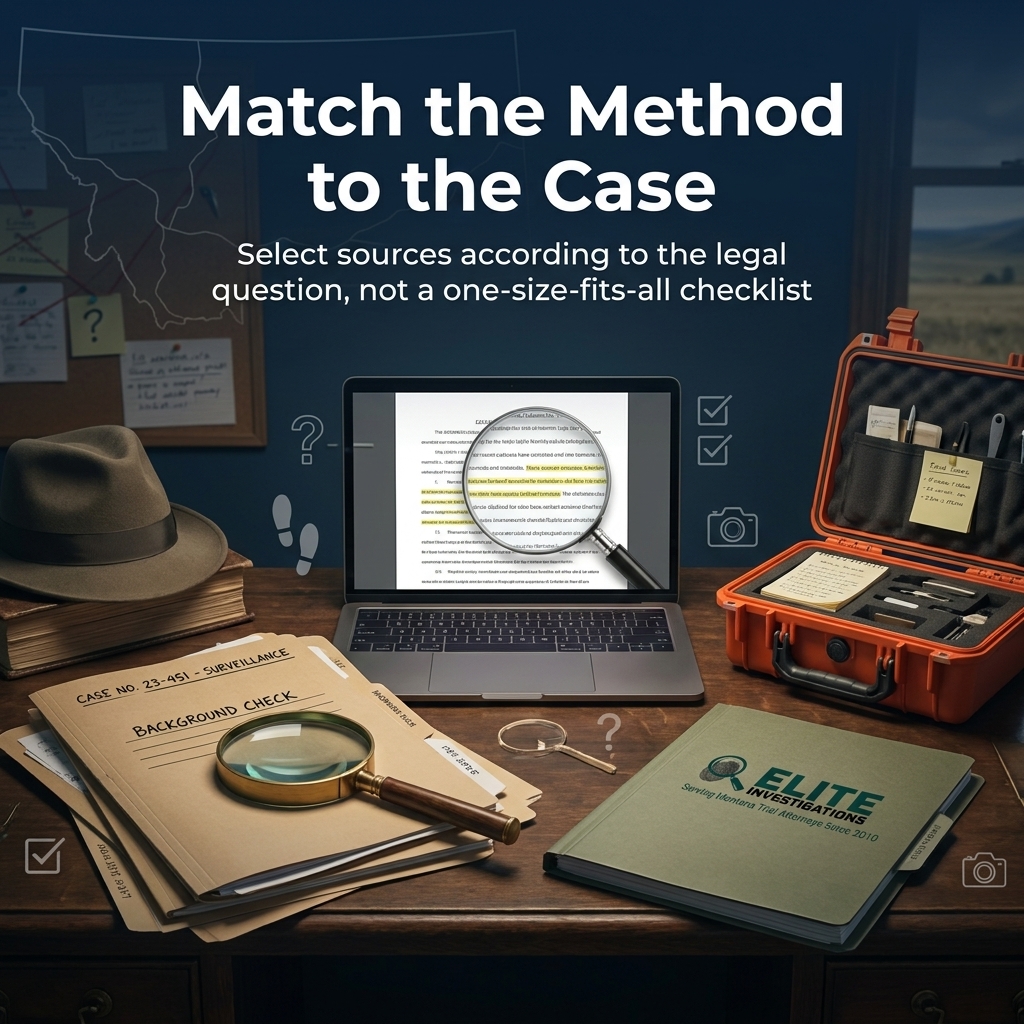
The right method depends on whether the case needs identity and history, firsthand knowledge, financial information, or evidence of current activity. A focused background investigation can be an efficient starting point when the legal question is narrow and the available identifiers are reliable. Expanded services should be added when records cannot answer the central question.
- Identity and history: A focused background investigation can help review relevant identity information, public records, and available history.
- Firsthand knowledge: Witness locating and interviews can help address what a person personally observed, when events occurred, or how relationships developed.
- Financial interests: An asset search can help examine property or financial interests relevant to the legal matter.
- Current activity: Surveillance or a social media investigation can help address present conduct, associations, activity, or location when lawful and relevant.
When a focused records review is enough
A focused records review may be enough when counsel needs to confirm identity details, examine relevant legal history, review available public records, or establish a reliable starting fact pattern. It is most useful when the subject’s identifiers are consistent and the legal question does not depend on firsthand testimony or current conduct.
Records still have limits. They may contain gaps, outdated entries, duplicate identities, or jurisdictional boundaries, so the report should distinguish verified information from leads that require additional checking.
When the investigation needs more than records
An investigation needs more than records when the case turns on disputed events, a witness’s firsthand knowledge, a relationship, a timeline, financial interests, or current activity. Witness locating and interviews can address factual gaps that a database cannot resolve, while an asset search may address a different question about property or financial interests.
Surveillance or social media investigation may be appropriate when current conduct, associations, or location matter. We recommend adding these methods only when they serve a defined legal purpose and can be pursued through lawful, documented practices.
How do jurisdiction, timing, and source quality affect the findings?
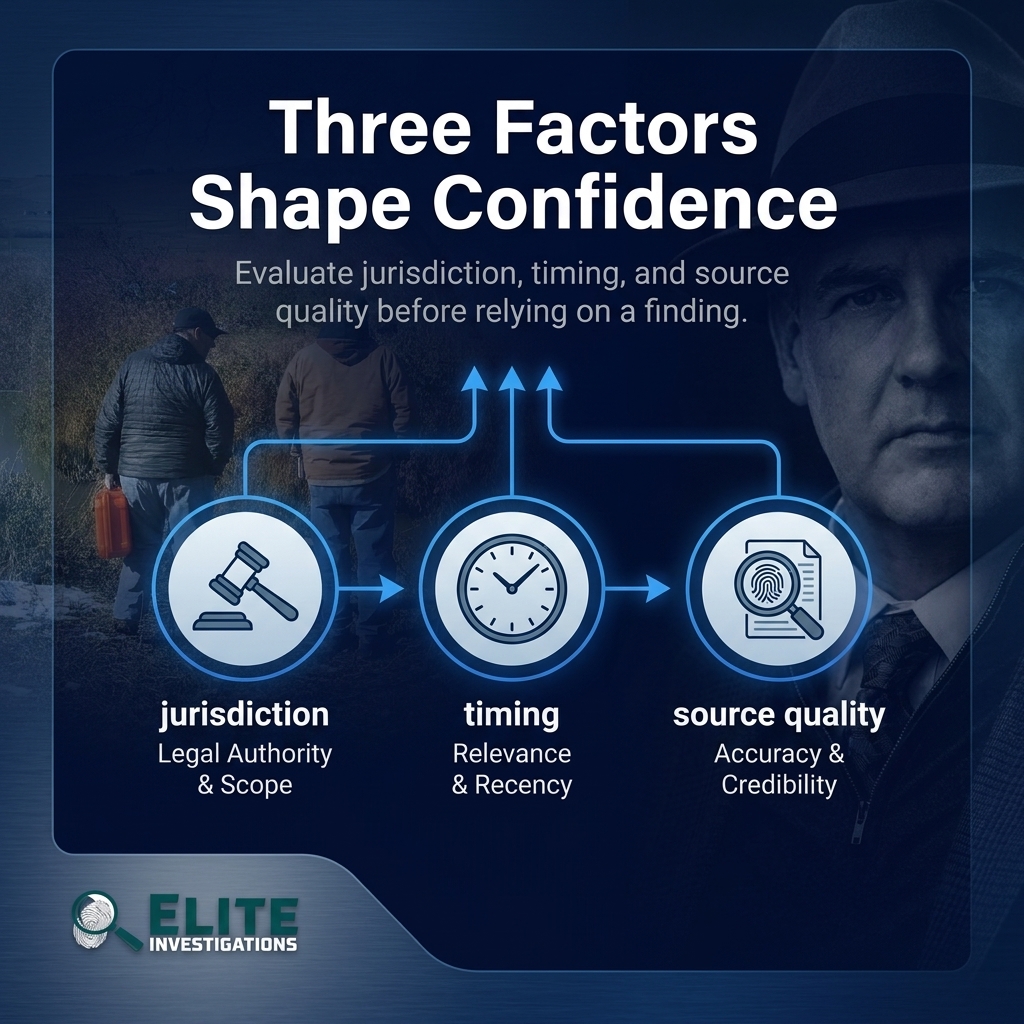
Jurisdiction, timing, and source quality directly affect how much confidence attorneys can place in a background investigation. A matter involving Montana and Wyoming may require attention to multiple counties, courts, agencies, databases, and address histories rather than one broad search.
Incomplete names, aliases, common names, old addresses, missing dates of birth, and inconsistent identifiers can make it difficult to separate one person from another. A search may also miss relevant information if the investigator does not know where the subject lived, worked, attended court, or conducted business during the period at issue.
Time period matters just as much. A question about recent conduct may require a different scope from a historical credibility inquiry or a due-diligence review covering many years. We recommend asking how information will be cross-checked, dated, documented, and separated from unverified leads before it supports a legal decision. Counsel should also understand which findings come from records, which come from interviews, and which remain unresolved.
What privacy and legal safeguards should attorneys expect?
A professional investigation should pursue information for a legitimate purpose and use lawful investigative practices appropriate to the matter. The scope should remain relevant and proportionate to the legal question rather than expanding simply because additional information may be available.
Attorneys should discuss privacy, source reliability, record accuracy, identity verification, and reporting expectations before work begins. Similar names can create serious errors, and an isolated record may not establish that information belongs to the subject. Social media content can also be incomplete, misidentified, outdated, or taken out of context.
Before authorizing expanded work, counsel should define handling requirements, deadlines, reporting needs, and any litigation or evidentiary considerations that affect documentation. Findings should identify the source and date of information where appropriate, explain relevant limitations, and distinguish confirmed facts from investigative leads. A clear report gives the legal team a better basis for deciding what requires further investigation or legal review.
How should you prepare a background check request for an investigator?
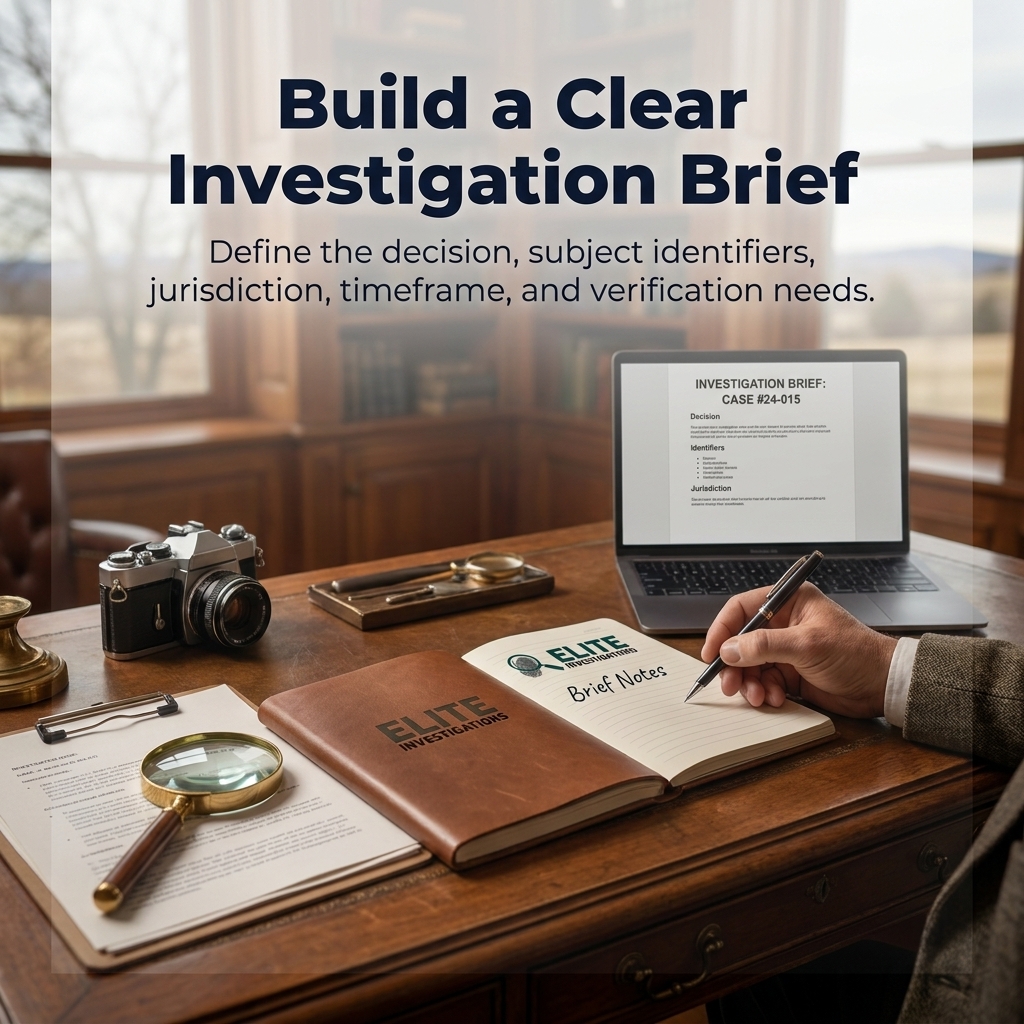
A well-prepared request starts with the legal question and gives the investigator enough context to recommend an appropriate scope. We suggest explaining what decision the report must support, rather than asking for a general search without a defined purpose.
Begin by identifying the subject and providing known names, aliases, prior addresses, employers, relevant documents, known associates, court references, and a case timeline when available. Then define the geography, relevant dates, deadline, and known gaps. Explain which facts are verified and which came from allegations, incomplete records, or informal sources.
A focused intake helps Elite Investigations determine whether to begin with a background investigation or discuss additional legal investigations, witness locating and interviews, asset searches, surveillance, or social media investigations. That decision should follow the facts and the legal objective, not an assumption that every service belongs in every case.
Attorneys and individuals in Billings, Montana, surrounding Montana communities, and Wyoming can prepare the goal, subject information, location, timeline, and known facts before contacting our team. You can also review our contact information for Elite Investigations when you are ready to discuss the matter.
What can attorneys expect from a focused investigative partnership?
Attorneys can expect a focused investigative partnership to begin with a clear legal question, defined scope, and practical discussion of what the available information can and cannot establish. Elite Investigations specializes in professional investigative services for attorneys and individuals seeking support with complex legal matters in Montana and surrounding areas, including Wyoming.
Our confirmed services include background investigations, legal investigations, witness locating and interviews, surveillance investigations, asset searches, and social media investigations. Depending on the matter, our broader service categories also include civil and criminal investigations, corporate investigations, due diligence, risk and liability investigations, contractor and vendor vetting, and employee misconduct investigations.
Testimonials supplied to us highlight Mike Toth and Elite Investigations for responsiveness, thoroughness, professionalism, and the ability to navigate challenging situations. Those qualities matter when counsel needs an investigator who can organize incomplete facts, identify practical next steps, and communicate findings clearly without promising a particular legal result.
To discuss a background investigation, contact Elite Investigations at +1 406-698-8911 or info@elitepimt.com. Tell us the legal question, subject, geography, timeline, and known facts so our team can discuss a focused investigative approach.
Frequently Asked Questions
What is included in a background check for an attorney?
Scope depends on the legal question, subject identifiers, jurisdiction, time period, and required level of verification. A focused investigation may examine relevant identity and records information, while expanded work may include witness interviews, asset searches, surveillance, or social media investigation. We recommend defining the scope before work begins rather than treating every request as the same package.
When should a legal team add witness interviews to a background investigation?
Consider witness interviews when the case depends on firsthand knowledge, disputed relationships, a timeline, credibility context, or information that records cannot establish. Witness locating and interviews address a different question from records research and may help fill factual gaps. The legal team should identify the desired information and relevant time period before requesting interviews.
Can a background investigation include social media or surveillance?
It can, when the case requires information about current activity, conduct, associations, or location. Social media investigation and surveillance should be relevant to the legal purpose, pursued through lawful methods, and documented carefully with attention to privacy and source verification. These services should be added because the facts require them, not as automatic parts of every background check.
Does Elite Investigations serve attorneys in Billings, Montana, and surrounding areas?
Yes. Elite Investigations provides investigative services primarily to attorneys in Billings, Montana, surrounding areas, and Wyoming. We also serve individuals seeking investigative assistance with legal matters. Contact our team to discuss the location, timeline, and investigative goal.
How do I get started with a background investigation?
Prepare the legal question, subject’s identifying information, relevant locations, time period, deadline, and known facts. Explain what decision or case task the findings must support so we can discuss an appropriate scope. Contact Elite Investigations at +1 406-698-8911 or info@elitepimt.com.