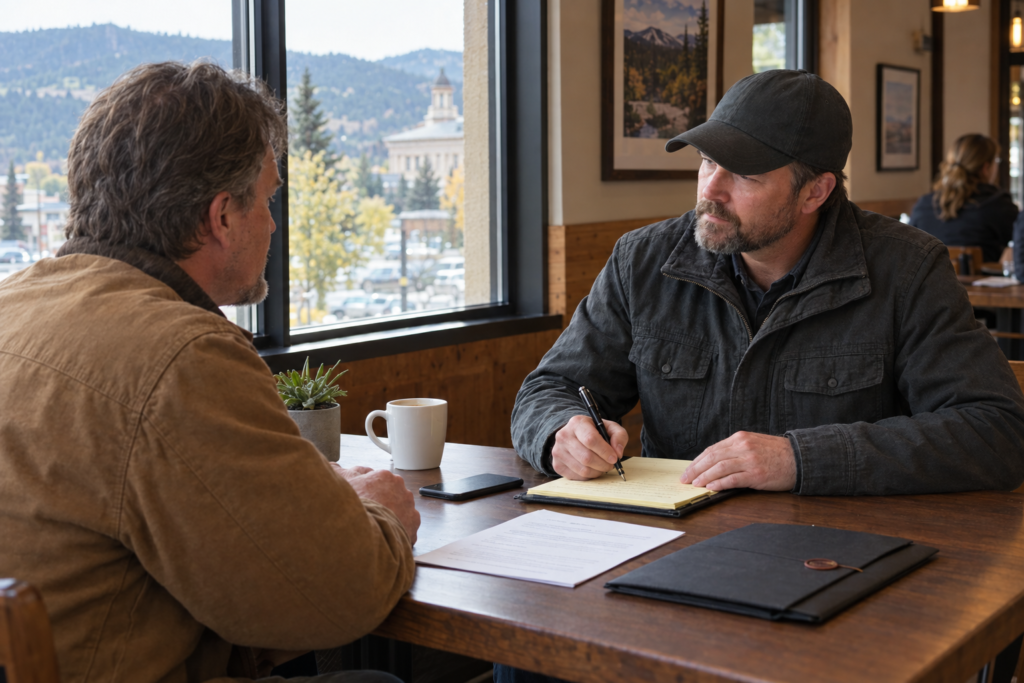
Early witness interviews matter because timely contact can preserve recollections, reveal additional witnesses and records, clarify disputed facts, and help Montana counsel decide what investigative work should happen next.
A witness may relocate, stop answering calls, lose access to records, or remember timing differently as a case develops. For attorneys handling a civil or criminal matter, delaying contact can narrow the available facts before the legal team has decided which issues require deeper investigation.
What can be lost when a witness is contacted too late?

Late contact can cost an attorney access to people, documents, and details that may help explain what happened. An early interview gives counsel and the investigative team an opportunity to preserve leads while the witness remains reachable and the relevant events remain relatively clear.
How memory, availability, and contact details change
Witnesses can move, change phone numbers, alter employment, or become difficult to reach as months pass. Memory may also shift, especially when a witness later hears competing accounts or reviews the matter through conversations with others. Early witness locating and interviews help document the person’s initial account, contact information, and references to records or other participants.
Why early information can shape investigative priorities
An early conversation may clarify a timeline, identify another witness, point to a record, or expose a factual inconsistency that deserves testing. It can also show that a proposed investigative step is unnecessary or that a different lead deserves priority. An investigative interview is not sworn testimony, a deposition, or an official law-enforcement interview; counsel decides how the information fits the legal strategy.
That distinction matters in Montana civil and criminal matters. Public officers, law enforcement, attorneys, and private investigators have different roles and responsibilities. A private investigator can support fact development, while counsel addresses legal and evidentiary questions and public officers handle official authority within their assigned duties.
How should attorneys define the purpose before locating a witness?
The interview should support a specific decision, such as confirming a timeline, identifying participants, locating records, or testing a factual inconsistency. Counsel and an investigator can define that decision before anyone makes contact, which keeps the assignment focused and makes the final report easier to use.
Before outreach, review pleadings, incident reports, contact records, photographs, messages, public information, and other available materials. Separate verified facts from assumptions, then prepare questions that invite the witness to describe events in their own words before moving to dates, locations, sequence, sensory details, and corroborating sources.
A practical planning check should cover:
Objective: What decision must the interview support? Identifiers: What names, locations, employers, phone numbers, or relationships help verify the person? Priority questions: Which facts require clarification first? Safety: Are there concerns about contact, travel, or retaliation? Documentation: What lawful method will capture the account? Reporting: Who receives the findings and when?
Set a focused objective and fact boundaries
A focused objective prevents the conversation from becoming a broad search for every possible fact. Counsel can identify the disputed point, define what remains unknown, and tell the investigator which issues are outside the assignment. Those boundaries help preserve time and reduce the risk that assumptions are presented as established facts.
Review existing records without prejudging the witness
Existing records should guide questions without deciding the witness’s credibility in advance. We recommend comparing the available timeline with photographs, messages, incident materials, and public information, then asking open questions before presenting specific details. This approach gives the witness room to explain differences and helps distinguish a genuine inconsistency from a simple misunderstanding.
What steps make an early witness interview accurate and professional?
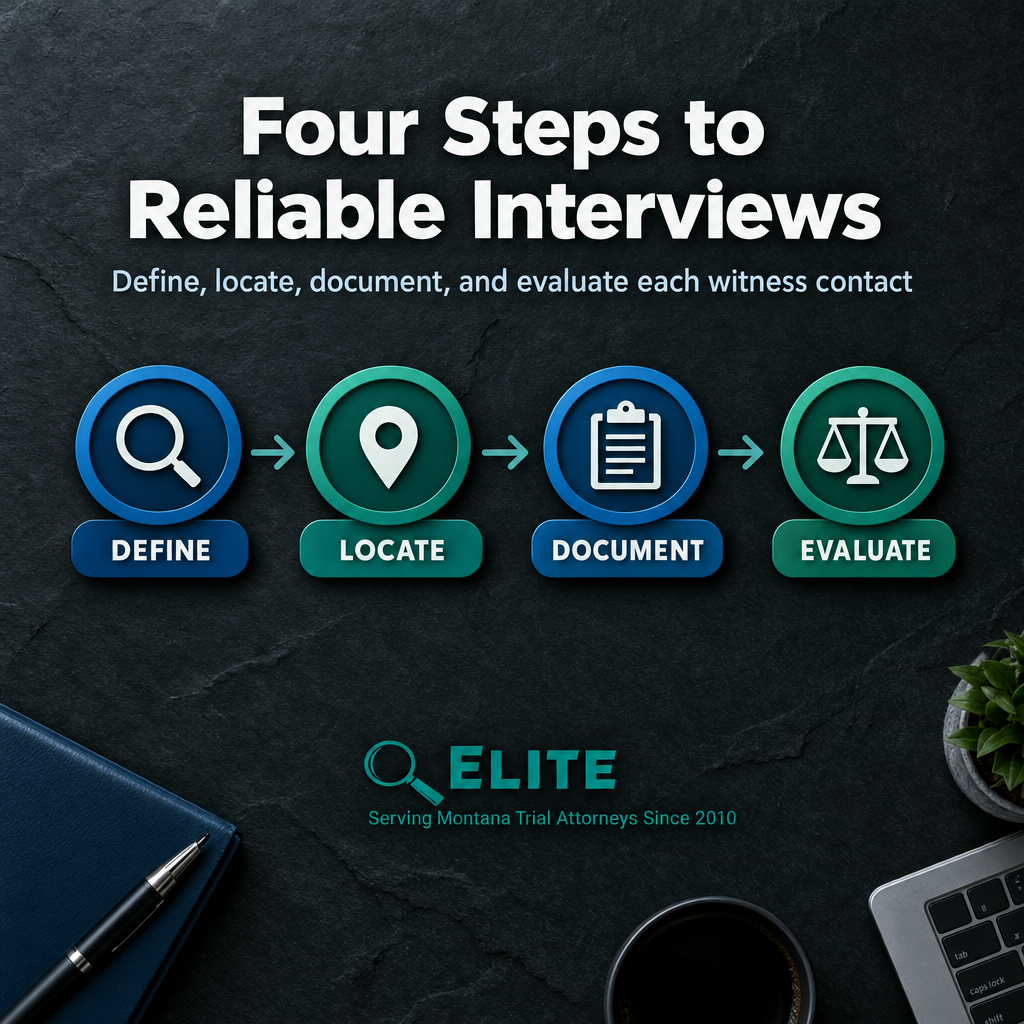
A reliable process moves from a defined assignment to verified contact, neutral questioning, careful documentation, and a report that counsel can evaluate. Witness locating may involve confirming identity, distinguishing people with similar names, checking lawful public sources, and documenting reasonable efforts when contact cannot be made.
- Define the objective: State the decision, disputed fact, or lead the interview should address.
- Locate and verify the witness: Confirm identity and relevant contact details using lawful methods and document reasonable attempts.
- Prepare questions: Start with open prompts, then organize questions about dates, places, people, records, and follow-up sources.
- Arrange contact: Select an appropriate method and setting while considering safety, availability, and any counsel instructions.
- Conduct the interview: Introduce the investigator accurately, explain the voluntary nature of contact where appropriate, and use neutral questions.
- Document the account: Follow applicable consent requirements for any recording and separate direct statements from investigator observations.
- Report findings to counsel: Identify the account, leads, inconsistencies, limitations, and recommended follow-up without overstating conclusions.
Locate and approach the right person
Correct identification comes before meaningful questioning. A name alone may be insufficient, particularly when several people share it or have connections to the same location. The investigator should verify relevant identifiers, use lawful public sources, avoid material misrepresentation, and approach the witness accurately and professionally. If contact fails, the report should record the efforts made and any limitations.
Document the conversation and report useful findings
A useful investigative report states the assignment scope, contact attempts, interview date and setting, witness account, documents or leads identified, inconsistencies requiring follow-up, and limitations. Direct statements should remain distinguishable from the investigator’s observations or assessment. Counsel can then decide whether the information supports another interview, a records request, surveillance, or a change in case priorities.
How can private investigators coordinate with public officers and counsel?

Private witness work can complement public officers and counsel when a legal team needs fact development, lead verification, or organized fieldwork. It does not replace law enforcement, emergency services, prosecutorial authority, or legal advice. Immediate threats and criminal emergencies should go to the appropriate public emergency or law-enforcement channel.
Coordination starts with a clear scope and reporting plan. Counsel should identify known official contacts, deadlines, safety concerns, and restrictions on outreach. The investigator should preserve relevant communications, follow applicable Montana requirements, and refer legal or evidentiary questions to the attorney.
Clarify roles in civil and criminal matters
In a civil investigation, an investigator may help counsel develop facts, locate witnesses, and organize information for legal review. In a criminal matter, private investigative work must remain separate from public authority and should not be presented as an official law-enforcement interview. No investigator should promise an outcome, offer legal advice, or imply authority they do not possess.
Avoid interference with an official investigation
Professional contact requires restraint: no intimidation, repeated unwanted contact, false identity, material misrepresentation, or interference with an official investigation or court process. When public officers are involved, counsel and the investigator should clarify what outreach is appropriate and preserve a record of relevant coordination. Immediate safety concerns belong with emergency services or law enforcement.
When is professional witness work worth arranging in Montana or Wyoming?
Professional assistance may be worthwhile when a witness is difficult to locate, the matter crosses jurisdictions, several witnesses need consistent handling, deadlines are approaching, or the factual record contains important gaps. Attorneys should evaluate a provider’s experience with legal investigations, witness locating and interviews, civil and criminal matters, clear scope definition, careful documentation, responsiveness, and service-area fit.
Elite Investigations provides professional investigation services primarily to attorneys in Billings, Montana, and surrounding areas, including Wyoming. Our services include legal investigations, witness locating and interviews, civil and criminal investigations, surveillance, background checks, asset searches, and related investigative support. We have provided professional investigation services for 16 years and maintain a service base in Billings. Confirm current availability, assignment scope, and applicable requirements during the initial discussion.
Signals that early assistance may help
Early assistance deserves consideration when the legal team has only partial contact information, a witness may leave the area, or a key account has not been independently tested. It is also useful when Montana and Wyoming locations overlap, several people require organized outreach, or counsel needs a documented record of reasonable locating efforts before deciding what to do next.
Questions to ask before assigning the work
Ask how the provider defines scope, verifies identity, documents contact attempts, handles voluntary interviews, reports limitations, and coordinates with counsel or public officers. Confirm whether the provider can support the relevant Montana or Wyoming location and whether the proposed deliverable matches the attorney’s decision point. Clear expectations reduce avoidable confusion later.
What should an attorney do after an early interview is complete?
After reviewing the interview, counsel should decide whether the facts support follow-up interviews, records requests, surveillance, background research, a location search, or a change in case priorities. Preserve the report and related materials according to counsel’s document-retention and privilege strategy, while recognizing that not every investigator communication is necessarily privileged.
A useful assignment intake includes the jurisdiction, matter type, known witness identifiers, urgency, investigative objective, safety concerns, existing documents, desired deliverable, and counsel’s contact information. Attorneys and individuals evaluating a Montana or Wyoming legal investigation can contact Elite Investigations or call +1-406-698-8911 to discuss whether witness locating and interview support fits the matter.
Turn interview findings into the next investigative decision
The interview should lead to a reasoned next step rather than sit unused in a case file. Counsel can compare the account with existing records, identify corroborating sources, assess unresolved inconsistencies, and decide whether additional investigation is justified. The investigator can then receive a revised scope that reflects what the first interview actually established.
Prepare a clear assignment request
A clear request gives the investigative team the jurisdiction, matter type, witness identifiers, urgency, objective, safety information, available records, desired report format, and counsel’s contact details. It also explains what the team should not do, including any outreach that could interfere with an official investigation or court process.
Frequently Asked Questions
Why do early witness interviews matter in Montana legal investigations?
Timely interviews can preserve recollections, identify additional leads, clarify timelines, and help counsel decide what investigation should happen next. An investigative interview is not the same as sworn testimony, a deposition, or an official law-enforcement interview, so counsel must decide how the information fits the case strategy.
Can a private investigator interview a witness during a criminal investigation?
A private investigator may conduct lawful investigative interviews to support counsel and fact development, subject to ethical limits and appropriate coordination with public officers. The investigator must avoid intimidation, material misrepresentation, interference, and unwanted repeated contact. Immediate emergencies should be directed to emergency services or law enforcement.
What is included in witness locating and interview support?
The process generally includes defining the objective, verifying identity, locating the witness, arranging contact, asking focused and neutral questions, documenting the account, identifying follow-up leads, and reporting findings to counsel. The exact scope depends on the assignment, jurisdiction, safety considerations, and requested deliverable.
Does Elite Investigations serve attorneys and clients outside Billings?
Elite Investigations provides professional investigation services primarily in Billings, Montana, and surrounding areas, including Wyoming. Contact our team to confirm whether the specific location, witness assignment, and current availability can be supported.
How do I get started with an early witness interview?
Prepare the matter type, jurisdiction, witness information, urgency, investigative objective, known documents, safety concerns, and counsel contact details. Then contact Elite Investigations through our website or by phone at +1-406-698-8911 to discuss whether early witness locating and interview support fits the matter.