Tracing hidden property after a death in Montana or Wyoming starts with a defined legal question, then follows the decedent’s identity, county history, real property, business connections, court records, and lawful financial leads until each possible match is verified or documented as unresolved.
What question should an asset search answer after someone dies?
An asset search should answer whether a missing bank account, real estate interest, business ownership, lien, judgment, or other property may matter to the probate estate or a legal claim. The right scope depends on the decision an attorney, personal representative, creditor, or family member must make next.
A search for probate assets may focus on property the decedent owned at death. A search involving a judgment or estate dispute may instead ask whether the person controlled reachable property, transferred an interest, or maintained a connection to another entity. Defining that distinction before research begins helps prevent a report filled with disconnected records.
At the same time, an overly narrow request can miss aliases, prior residences, jointly held property, inherited land, or businesses registered under a related name. We recommend stating the legal objective, known jurisdictions, and asset categories of concern before selecting records to review.
For example, suppose a person who lived near Billings later maintained family land in eastern Montana and a seasonal residence in Wyoming. An estate administration search may prioritize title and ownership records, while a creditor-related assignment may also examine liens, judgments, business interests, and transfers. The same decedent can require different search paths depending on the claim.
Which information makes a deceased person’s property search more accurate?
A complete intake packet makes a deceased-person property search more accurate because it gives investigators several ways to separate the correct person from similar names. Useful sources include probate papers, correspondence, tax documents, loan records, insurance files, business paperwork, and court pleadings.
We recommend gathering the legal name, former names, aliases, date of birth when lawfully available, past addresses, known employers, business names, family or ownership connections, relevant counties, and documents that describe the estate or claim. Even a partial packet can start the process, but missing identifiers may increase the time required to test possible matches.
Investigators should work from documents lawfully available to the client or attorney and record the source of each lead. That practice helps counsel understand why a record was reviewed and whether a possible asset can support a later title review, probate request, discovery effort, or other legal step.
Identity details that reduce false matches
The legal name, former names, aliases, date of birth when lawfully available, and known employers provide the strongest starting points for distinguishing a decedent from someone with a similar name. A Social Security number should be used only through authorized channels and for a lawful purpose.
Common names require extra confirmation before a record can be connected confidently to the deceased person. Matching a name alone does not establish ownership, residence, or control.
Location and relationship clues
Past addresses, counties, marital status, family relationships, business partners, and known property locations can reveal where the search should proceed. Montana and Wyoming residences may include rural land, ranch holdings, seasonal homes, or moves across county lines.
Relationship clues also help identify jointly held property and related entities without treating a relative’s or company’s asset as the decedent’s personal property. Each connection still requires separate ownership verification.
Which records and search paths can reveal property or financial interests?
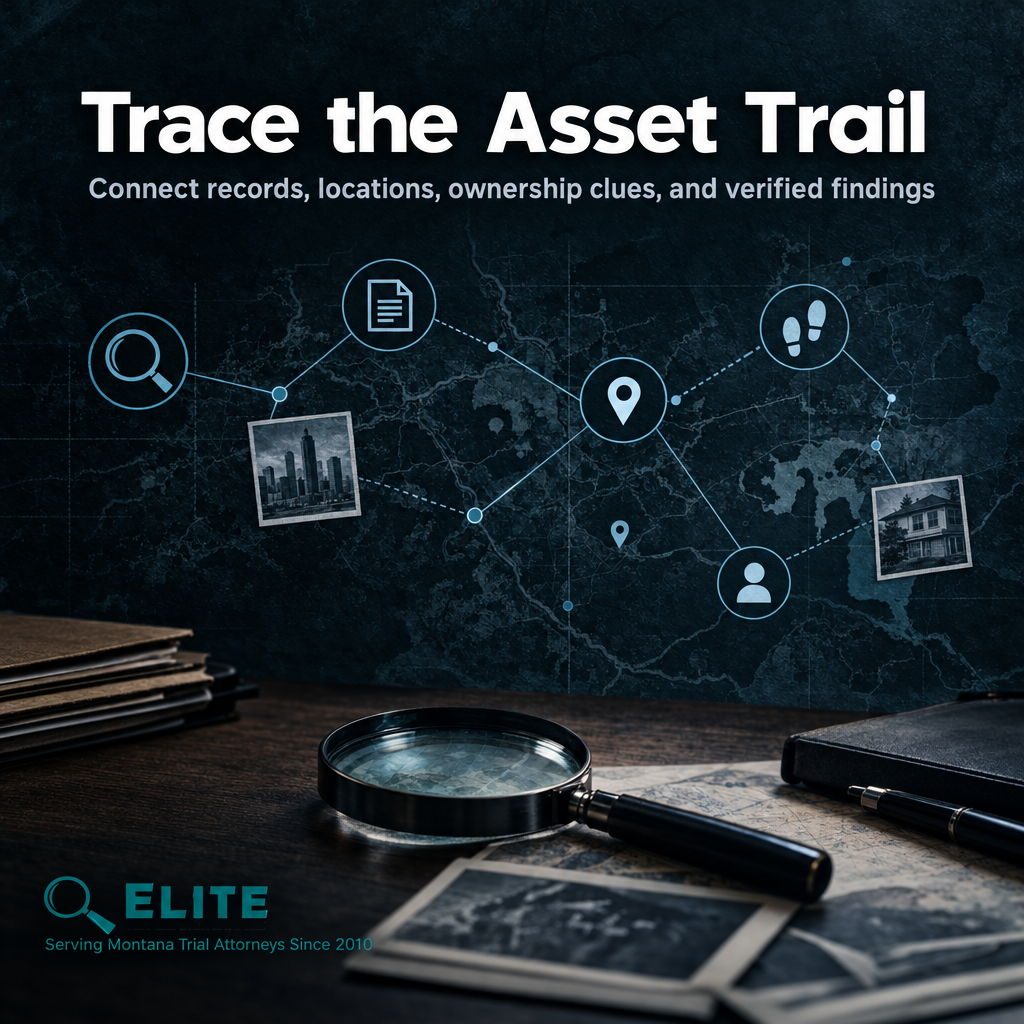
No single database proves the full asset picture; reliable research combines public records, court filings, corporate records, property databases, and lawful investigative work. We preserve search dates, jurisdictions checked, name variations, documents reviewed, and the reasons a possible match was accepted or rejected.
A focused deceased-person asset search can follow these steps:
- Define the legal objective: State whether the assignment concerns probate assets, estate administration, a debt, a judgment, or another claim.
- Build the identity profile: Compile names, aliases, dates, addresses, employers, relatives, and business connections.
- Map counties and states: Identify Montana and Wyoming jurisdictions connected to residence, work, property, inheritance, or litigation.
- Search property, business, court, and lien records: Review relevant deeds, mortgages, tax information, entity filings, judgments, liens, and court documents.
- Verify ownership: Compare identifiers, dates, addresses, entity relationships, and transfer documents before treating a lead as an estate asset.
- Document findings and gaps: Separate verified results, probable leads, negative findings, unavailable records, and recommended follow-up.
Real estate, mineral interests, and local property records
County assessor, recorder, clerk, tax, deed, mortgage, and lien records may reveal real property or ownership clues, including interests connected to rural land or mineral rights. The relevant record may sit outside the decedent’s last residence.
Montana and Wyoming searches may need to cover several counties when the person lived, worked, inherited property, or operated a business across state lines. A property record remains a lead until identity, ownership, and transfer history are confirmed.
Businesses, court filings, and related entities
Secretary of State records, litigation filings, bankruptcy records, judgments, liens, and business documents can show an ownership or control connection. They may also reveal entities worth examining when a person used a company name rather than an individual name.
An entity connection is not proof that the decedent personally owned a recoverable asset. We recommend tracing the relationship through dated filings and other records before counsel relies on it in estate administration or litigation.
Bank account leads and lawful investigative research
Public research may identify financial leads, but it does not automatically disclose every bank account or private account detail. Access depends on authorization, institution procedures, privacy rules, and applicable legal process.
A professional asset search is documented investigative research, not unauthorized access to private systems. Bank account searches should remain tied to the defined assignment and the authority available to the client or attorney.
How do Montana and Wyoming location factors change the search plan?
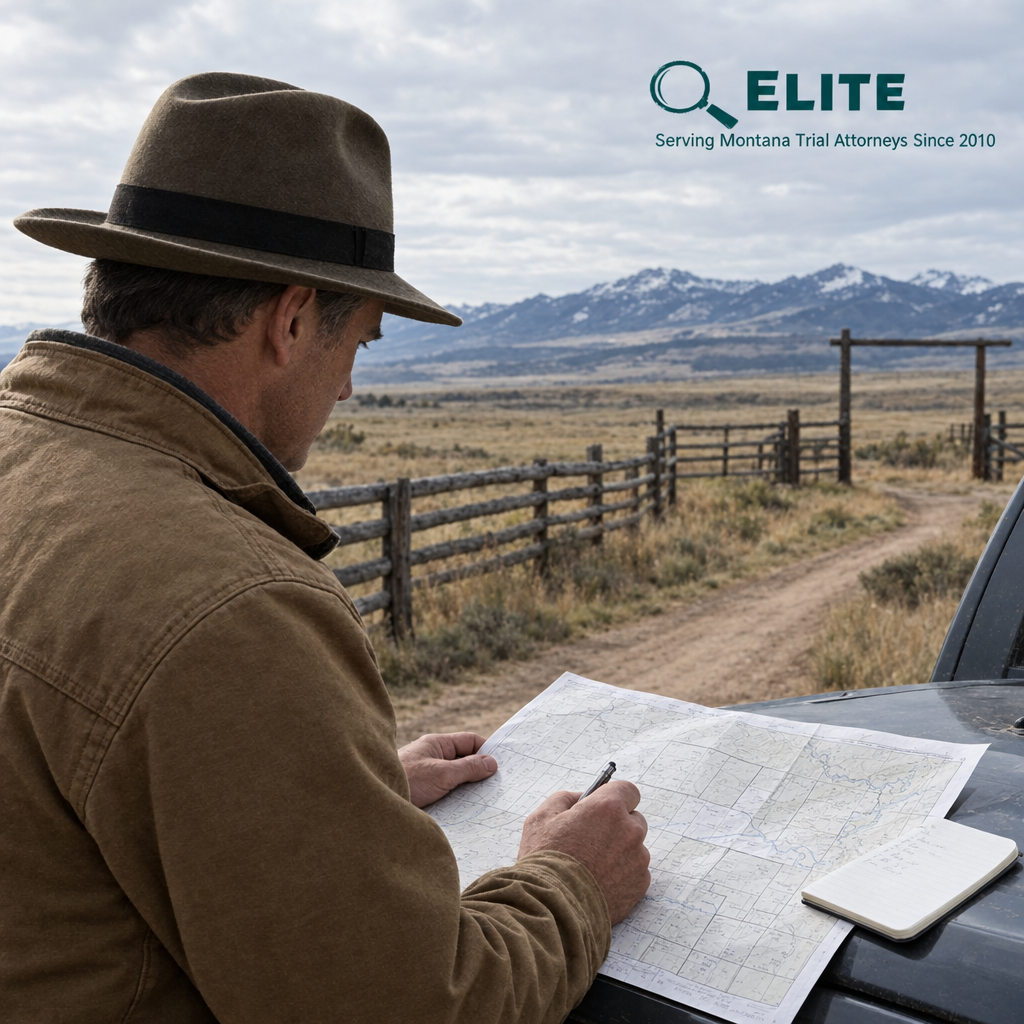
Montana and Wyoming asset searches often require county-level research because rural land, wide service areas, older records, ranch holdings, seasonal residences, and ownership spread across jurisdictions can leave gaps in an initial search. A statewide name search may miss the local record that explains the person’s actual property history.
Billings can serve as a practical coordination point, but the relevant trail may extend to Bozeman, Butte, Anaconda, Baker, Missoula County, eastern Montana, or Wyoming communities depending on the decedent’s residences and relationships. Informal property names, family-held land, a business registered in another county, or transfers connected to marriage or inheritance can all change the research path.
We recommend mapping the person’s location history before expanding the assignment. Counsel should also confirm current county procedures, filing access, document availability, and applicable Montana or Wyoming probate, privacy, and public-record requirements with qualified legal counsel.
Readers handling matters in Billings, Bozeman, Butte, Missoula County, or Wyoming can benefit from starting with the legal question and known location history, then extending the search only where evidence points. That approach keeps the work focused while preserving room to investigate a credible lead.
When should an attorney or family representative hire an investigator?
An investigator may fit when an estate involves multiple residences, aliases, suspected undisclosed property, business interests, incomplete records, disputed debts, or a need for a defensible research log. The earlier the legal objective is defined, the easier it is to compare a focused search with a broader assignment.
Elite Investigations provides asset searches and related legal investigation services for attorneys and clients in Billings, surrounding Montana areas, and Wyoming. Depending on the question, related capabilities may include witness locating and interviews, background investigations, bank account searches, corporate investigations, due diligence, and surveillance.
Results depend on available identifiers, lawful access, record availability, and the assignment defined at the start. We do not treat a possible record as a guaranteed recovery, and a search does not promise access to restricted financial information.
Signs that a professional search may fit
A professional search may fit when records are incomplete, the decedent used several names, property may exist in more than one state, or a business connection is difficult to interpret. It can also help when counsel needs a documented process before deciding whether to pursue probate discovery, title review, or creditor remedies.
Attorney-directed work keeps the research tied to the probate, collection, estate administration, or civil litigation objective rather than an undefined search for everything.
How to compare scope before authorizing work
Before authorizing work, ask which jurisdictions, record types, identity data, ownership questions, deliverables, and limitations the assignment covers. Confirm whether the search includes property records, entity filings, court records, liens, bank account leads, or only selected categories.
We recommend discussing the person, jurisdictions, records of concern, and legal objective with Elite Investigations before selecting a search scope.
What should the final asset-search report help you decide?
A useful asset-search report should help counsel decide what to do next by separating verified ownership, probable leads, unresolved matches, negative findings, records unavailable to the investigator, and recommended follow-up. Clear categories are more useful than a long list of names and database entries.
For example, a possible property record in Yellowstone County may appear connected to a decedent, but counsel should verify identity, ownership, transfer history, and any joint interests before treating it as an estate asset. The report can then help determine whether to pursue subpoenas, probate discovery, title review, creditor remedies, additional interviews, or no further investigation.
For readers in Billings, Bozeman, Butte, Missoula County, eastern Montana, and Wyoming, the practical starting point is consistent: define the legal question, assemble the person’s location history, and expand only where the evidence points. To discuss a Montana or Wyoming assignment, contact Elite Investigations with the known identifiers and the decision the search must support.
Frequently Asked Questions
What is an asset search for a deceased person?
An asset search is lawful investigative research used to identify possible real estate, business interests, liens, judgments, accounts, or other property connected to a deceased person. The scope depends on whether the question concerns probate, estate administration, a debt, a judgment, or another legal claim.
What information should I provide before starting a deceased-person asset search?
Provide the legal name, aliases, past addresses, date of birth when lawfully available, known employers, business names, family or ownership connections, relevant counties, and case or probate documents. These details help distinguish the decedent from people with similar names and guide the search toward the right jurisdictions.
Can an asset search find bank accounts after someone dies?
Lawful research may identify financial leads, but private account information is subject to authorization, institution procedures, privacy rules, and applicable legal process. Public records alone may not reveal every account, so the assignment should state what access and follow-up options are legally available.
Does Elite Investigations serve clients in Montana and Wyoming?
Elite Investigations serves attorneys and clients in Billings and surrounding Montana areas, including Wyoming, with asset searches and related legal investigation services. Contact the firm to discuss the assignment, known jurisdictions, records of concern, and the legal question before selecting a scope.
How do I choose the right scope for a deceased person’s asset search?
Define the decision the search must support, list known jurisdictions and identifiers, select relevant record categories, confirm lawful access, and agree on documentation and deliverables before work begins. A clear scope helps prevent both an unfocused search and an assignment too narrow to address credible leads.