Investigative findings can give counsel clearer timelines, stronger factual leads, better witness questions, and a more informed case strategy, provided the work begins with a defined legal question and the results receive careful legal review.
When attorneys search for online private investigation services, they may be trying to verify an identity, test a factual claim, locate a witness, understand a timeline, or find information that supports further discovery. At Elite Investigations, we help attorneys and individuals connect those questions to an appropriate investigative path.
Start With the Legal Question, Not the Investigation Type
The phrase online private investigation services can describe very different assignments, so the first step is to define what the case still needs to establish. A focused question helps determine whether the matter calls for social media investigations, witness locating and interviews, an asset search, a background check, surveillance, or a bank account search.
For example, counsel may need to determine whether two online identities appear connected, whether a witness can be located, whether a person’s stated timeline has gaps, or whether publicly available information points to property or financial interests. Before work begins, we can help organize known names, aliases, usernames, addresses, dates, relationships, and disputed facts into a workable assignment.
Investigative findings support legal strategy; they do not replace legal advice. Counsel should review relevance, lawful use, confidentiality, authentication, and intended case use before relying on any result in a civil or criminal matter.
How an unanswered factual question shapes the assignment
An unanswered factual question determines what information matters and what investigative method is proportionate. If the issue concerns a person’s identity, online identifiers may be useful; if it concerns testimony, locating and interviewing a witness may be more productive. Defining the question also helps limit irrelevant searching and keeps the assignment tied to the case’s dates, parties, and jurisdiction.
Why online research may need field investigation support
Online information may identify a lead without resolving the underlying issue. A username can point toward a possible identity, while a public address or connection may help guide witness locating, an interview, records research, or surveillance. Field work brings separate legal, privacy, authorization, and documentation considerations, so counsel and investigator should coordinate before expanding the assignment.
Which Investigative Service Answers the Question in Your Case?
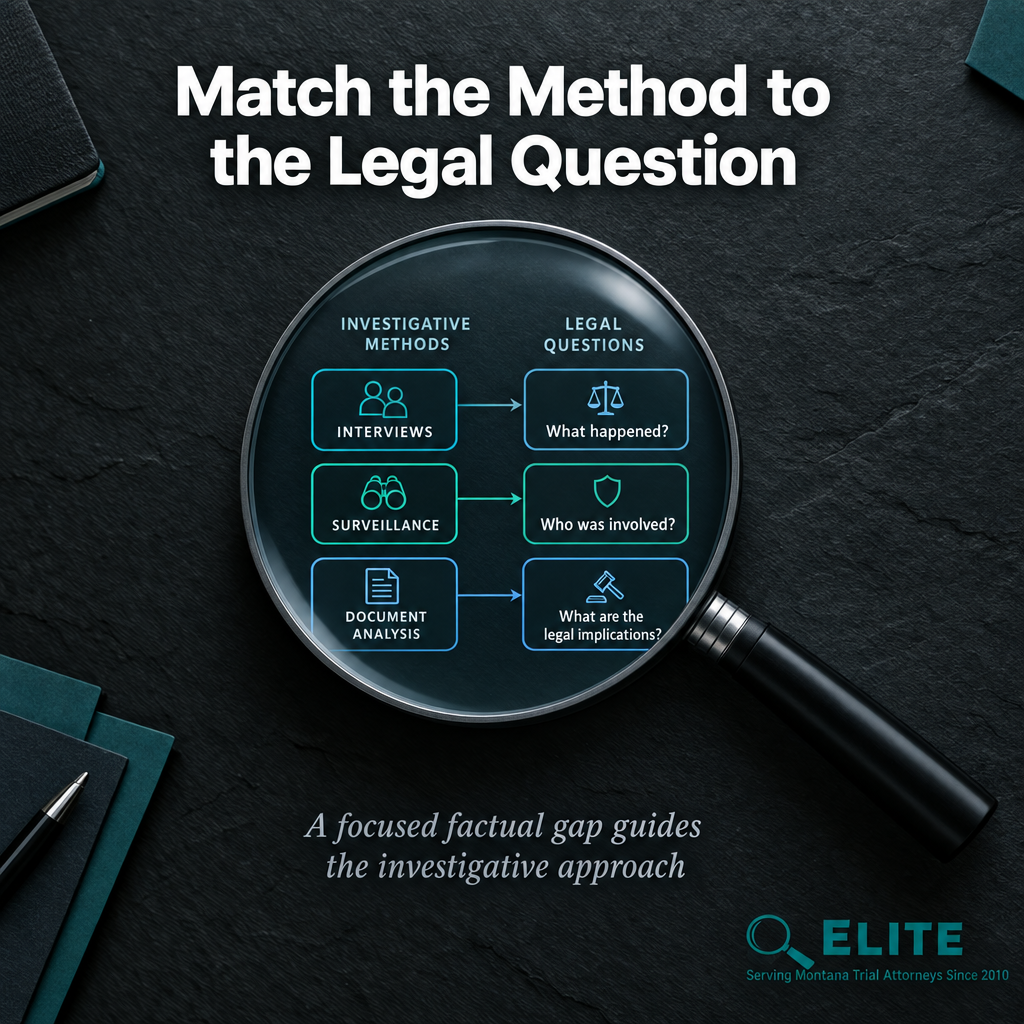
The best service is the one that addresses the specific factual gap with information the investigator can lawfully and responsibly obtain. One case may need one method, while another may require several connected steps.
- Social media investigations: These may help examine publicly available activity and identity clues. Useful starting information can include names, aliases, usernames, platforms, dates, and locations. Findings may include possible identity connections, timeline entries, public posts, images, or leads for follow-up.
- Witness locating and interviews: This may help identify, locate, and document relevant testimony. Names, prior addresses, employers, relationships, and known dates can help begin the search. The result may be a location lead, contact information, or documented interview information.
- Asset searches: These may investigate publicly available indicators of property or financial interests. Names, business connections, prior addresses, and jurisdictional details can help define the search. Findings may identify leads requiring further verification or legal process.
- Background checks: These may help verify identity, history, or affiliations within the assignment scope. Accurate identifying information and a defined purpose are important. Results can help counsel identify discrepancies or areas for additional inquiry.
- Surveillance investigations: These may document activity over a defined period. The assignment should identify the subject, relevant dates, location, and purpose. Observations can contribute to a timeline, but they require careful reporting and context.
- Bank account searches: These require particular caution because access, authorization, and legal limits vary by matter. Counsel should explain the lawful objective and intended use before any work is authorized.
Methods can also work together. An online identifier may guide a broader investigation, or locating a witness may need to occur before an interview can address the disputed facts.
Matching methods to factual gaps
Match the method to the question rather than selecting a service because it sounds broad. Use online research for public identity and activity leads, interviews for testimony, surveillance for defined observations, and asset or background research for identity, ownership, affiliation, or history questions. The narrower the factual gap, the easier it is to evaluate whether the work produced useful information.
A quick selection guide for attorneys and individuals
Start by writing one sentence that describes the decision the finding may inform. Then identify the subject, relevant dates, known locations, and desired outcome. If the assignment involves personal information, financial interests, or contact with another person, discuss authorization, confidentiality, and legal limits before work begins.
What Does a Social Media Investigation Include, and What Affects Cost?
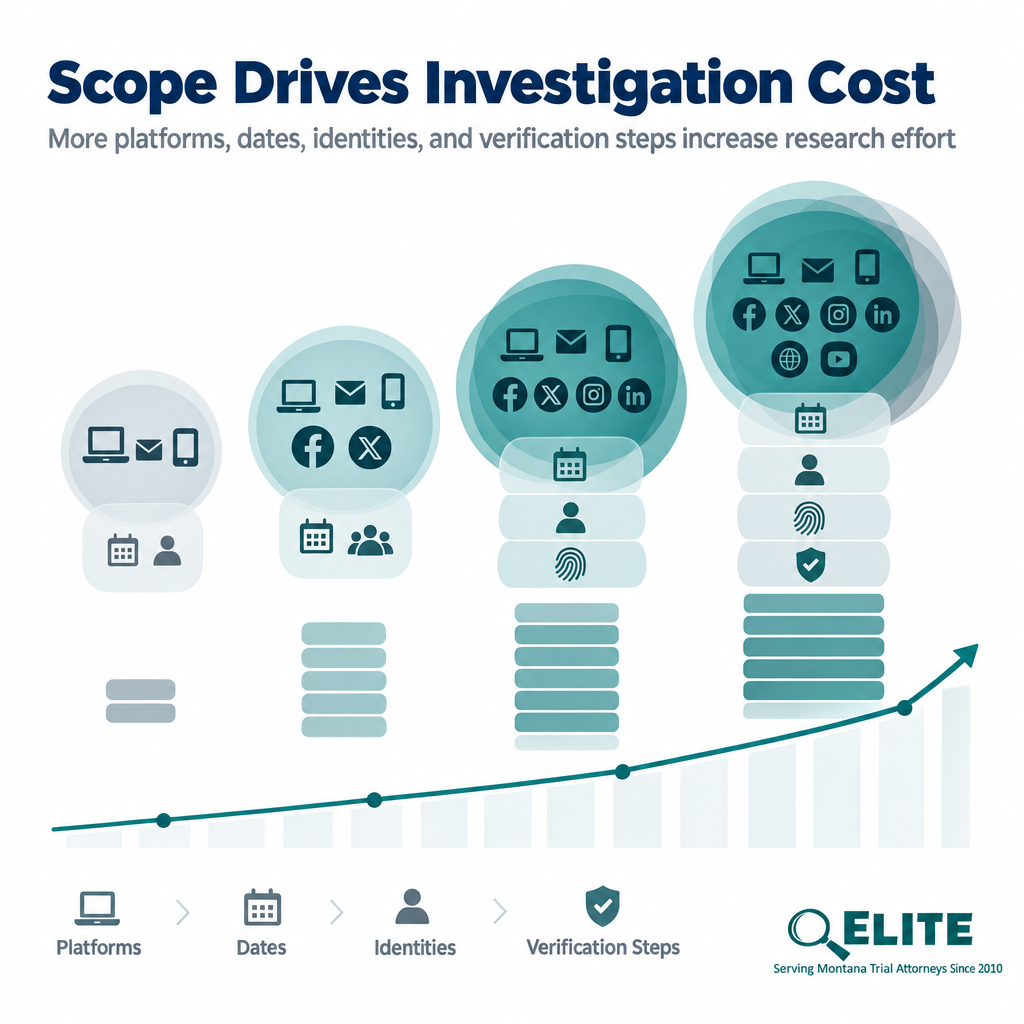
A social media investigation generally involves a scope-based review of publicly available information relevant to a defined legal question. Possible work areas include public profiles, aliases, usernames, dates, locations, connections, posts, images, and activity that may help verify an identity, develop a timeline, corroborate a statement, locate a person, or identify leads for follow-up investigation.
Social media search cost depends on scope, depth, search terms, number of subjects, locations, date range, platform coverage, and time required. A focused review of one subject and a narrow date range may require a different level of work than a multi-subject, multi-platform assignment. We recommend discussing the objective before requesting a case-specific scope rather than relying on a generic price.
Ask how relevant findings will be documented, dated, organized, and delivered for attorney review. Counsel should also decide how preservation, screenshots, source information, context, and limitations will be handled. Whether a finding is admissible or useful depends on the case and counsel’s judgment.
Typical scope and information sources
A typical scope may identify the subject, known aliases, usernames, platforms, locations, relevant dates, and the activity that matters to the legal question. Public posts, images, profile details, connections, and other visible information may provide leads, but an apparent match should be treated as an investigative finding that requires identity verification and context.
Questions to settle before requesting a search
Before authorizing work, define whether the goal is identity verification, timeline development, locating a person, corroborating a statement, or generating follow-up leads. Also settle the subjects, platforms, date range, geographic scope, reporting format, preservation expectations, and communication process so the investigator can estimate the assignment accurately.
How Investigative Findings Can Strengthen Case Preparation
Investigative findings can help attorneys test factual claims, identify inconsistencies, locate witnesses, develop timelines, assess credibility questions, and identify areas that require additional discovery or investigation. A finding may show that counsel should ask a different deposition question, seek a document, contact another witness, or examine a date more closely.
Raw information is not automatically established proof. A search result, online post, address, image, or reported statement may require authentication, corroboration, context, and lawful documentation before counsel relies on it. We recommend treating early findings as leads until their reliability and connection to the legal issue are evaluated.
A written investigative report can support internal case planning by organizing sources, dates, observations, limitations, and recommended follow-up questions. Disciplined communication keeps the assignment tied to the legal issue, relevant dates, jurisdiction, and intended use. Our team’s experience with legal investigations helps us focus on the factual questions that matter to counsel.
Turning raw information into usable leads
Raw information becomes more useful when it is connected to a subject, date, source, and specific case question. An investigator can organize possible links, document what was observed or located, identify uncertainties, and separate verified information from suggestions for further inquiry. Counsel can then decide whether to pursue discovery, an interview, records, or additional investigation.
Questions findings may help counsel evaluate
Findings may help counsel evaluate whether a stated timeline is consistent, whether a person can be located, whether witnesses may have relevant knowledge, whether an identity or affiliation appears accurate, and whether additional assets or records warrant attention. They may also reveal questions that require corroboration rather than support a final conclusion.
What Should You Send an Investigator Before Work Begins?
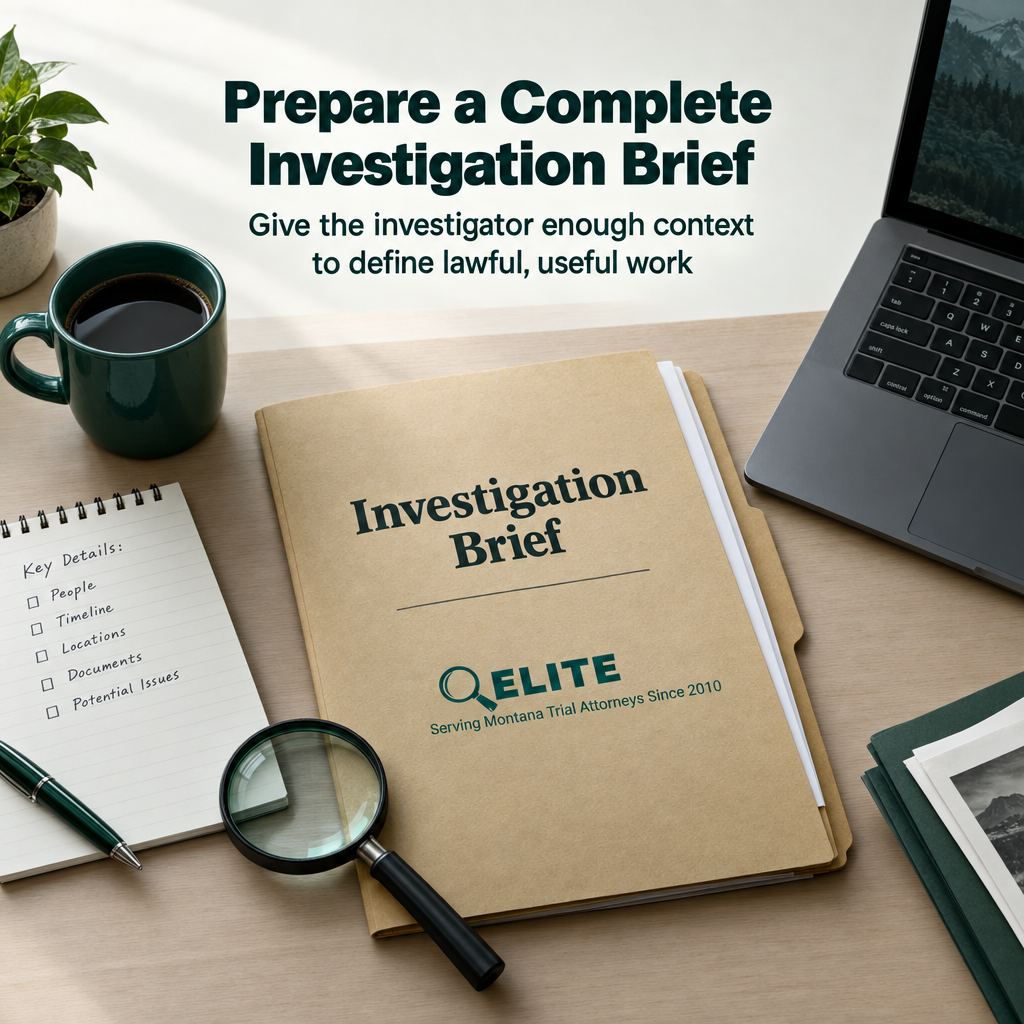
The strongest intake gives the investigator a defined legal question, accurate identifiers, relevant dates, geographic scope, urgency, and a clear communication process. Attorneys should share information that is relevant and authorized for the assignment, while identifying deadlines such as hearings, depositions, filing dates, or limited witness availability.
A practical intake checklist is: 1) state the legal question; 2) provide names, aliases, usernames, addresses, and relationships; 3) identify relevant dates and locations; 4) explain urgency and deadlines; 5) provide related documents that may be shared lawfully; 6) define the geographic scope; and 7) identify the preferred communication process.
Before work begins, agree on the assignment scope, expected deliverables, update cadence, approval process for expanded work, and how urgent developments should be communicated. Elite Investigations provides professional investigative services for attorneys and individuals and can discuss the appropriate investigative path before work begins.
A practical intake checklist
Begin with the issue counsel needs to evaluate, then provide only the identifiers and documents that help answer it. Include known addresses, usernames, relevant dates, locations, deadlines, and any information about witness availability. Clear intake reduces avoidable searching and helps the investigator explain what can reasonably be attempted within the assignment.
How to set communication and reporting expectations
Decide whether counsel wants an initial update, a written report, source organization, photographs or other documentation, or a closing call. Also decide who may authorize expanded work and how urgent information should be sent. These expectations help protect confidentiality and prevent an investigator from pursuing work beyond the approved question or scope.
How Do You Choose an Online Private Investigation Service in Montana or Wyoming?
Service-area confirmation matters because an online lead can develop into witness contact, surveillance, records research, or other location-specific work. A provider should be able to explain which methods fit the assignment, what information is needed, what limitations apply, and how communication will work if the matter moves beyond online research.
Elite Investigations serves Billings, Montana, surrounding areas, and Wyoming. Prospective clients seeking work in Bozeman, Butte, Anaconda, Baker, or Missoula County should confirm the specific location and method before authorizing an assignment, particularly when field activity may be required.
When comparing providers, consider experience with legal investigations, responsiveness, clear scope, relevant methods, careful documentation, reporting practices, and the ability to explain limitations without promising a particular outcome. Elite Investigations focuses on professional investigative services for attorneys and individuals, including complex matters where witness interviews and factual organization may influence case preparation.
Service area and local assignment fit
Confirming local fit early helps prevent delays when a digital lead requires action in a particular Montana or Wyoming community. Ask whether the provider can discuss the requested method for Billings and surrounding areas, and whether assignments involving Bozeman, Butte, Anaconda, Baker, or Missoula County should be scoped separately based on location and field requirements.
Questions to ask during the first consultation
Ask which investigative method best fits the legal question, what identifiers are needed, what information can be pursued lawfully, how findings will be documented, and what limitations may affect the work. To discuss your matter with Elite Investigations, contact our team at 406-698-8911 or info@elitepimt.com with the question, timing, available identifiers, and preferred service area.
Frequently Asked Questions
How can online private investigation services support an attorney’s case strategy?
Online research and related investigative work may help develop timelines, locate witnesses, evaluate factual claims, identify leads, and guide follow-up questions. Findings require legal review, authentication, and context before counsel relies on them.
What is included in a social media investigation?
A scope-based review may examine publicly available profiles, usernames, aliases, dates, locations, posts, images, and connections relevant to the defined legal question. The platforms, date range, subjects, reporting format, and lawful access should be agreed upon in advance.
How should an attorney get started with an investigative assignment?
Prepare the legal question, known identifiers, relevant dates, geographic scope, urgency, supporting documents, and preferred communication process. Contact Elite Investigations at 406-698-8911 or info@elitepimt.com to discuss the assignment.
Is this type of investigative support appropriate for individuals as well as law firms?
Yes. Elite Investigations provides professional investigative services for attorneys and individuals. Each prospective client should describe the factual question and intended purpose so we can discuss whether the requested method fits the matter.