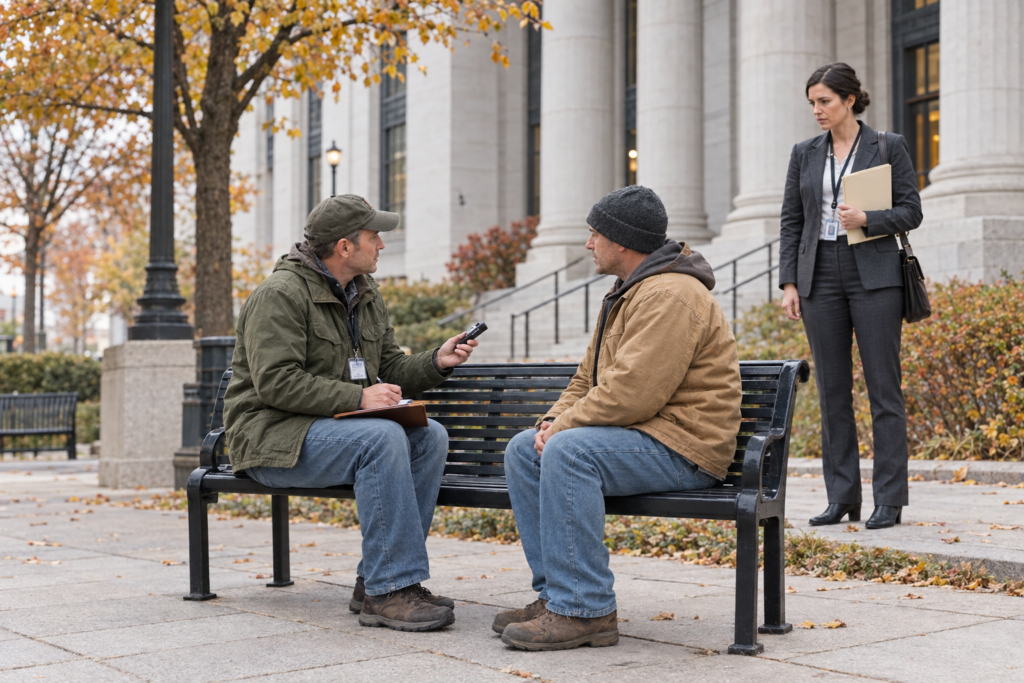
A defense team may have only a limited window to test the prosecution’s account, locate witnesses, and clarify disputed facts before trial. We help attorneys turn those unanswered questions into lawful, focused investigative assignments that produce information counsel can assess alongside discovery and trial strategy.
Which pretrial questions should an attorney assign to a legal investigator?
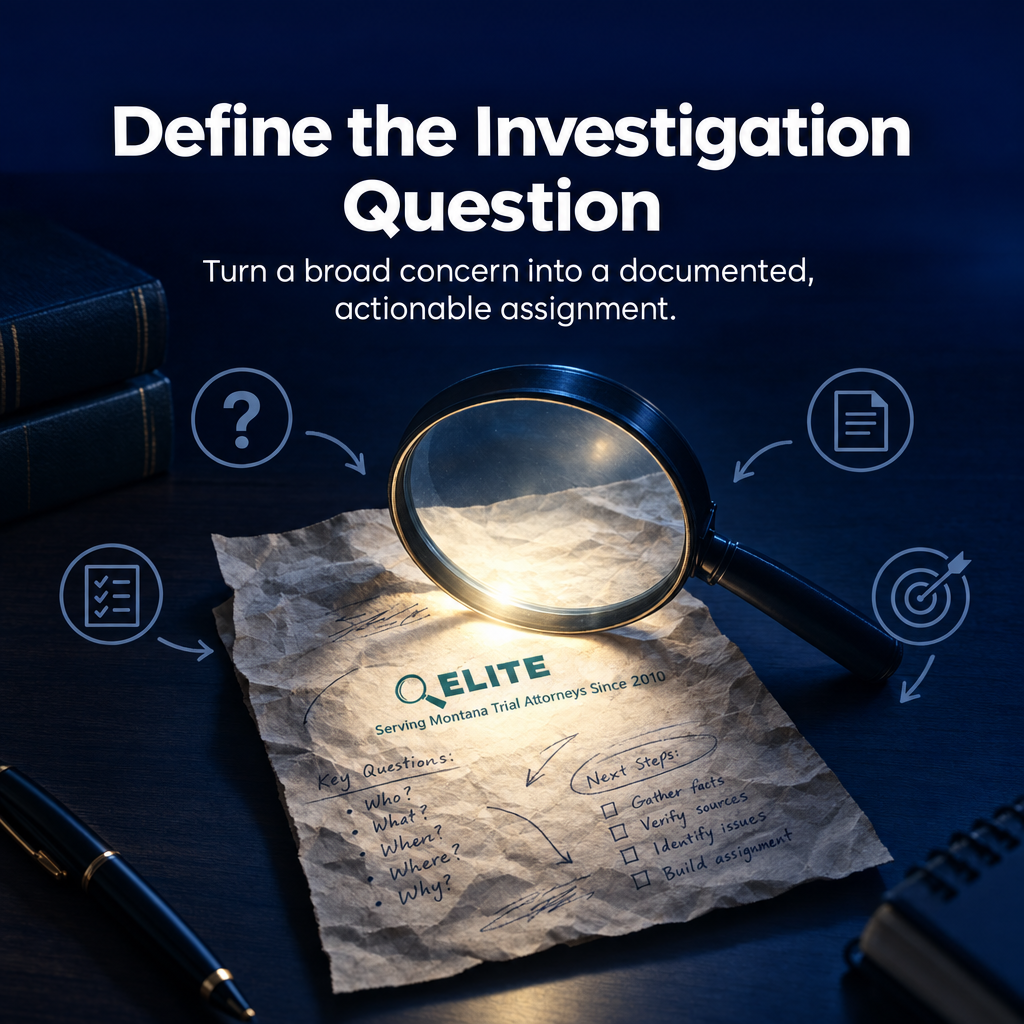
The best pretrial assignments begin with a specific factual question, not a general request to investigate everything. An attorney may need to determine who saw an event, whether a timeline is consistent, whether a witness can be located and interviewed, or whether an online statement warrants verification.
A private investigator supports the defense team’s lawful fact-finding; the investigator does not replace public officers, law enforcement, prosecutors, judges, or court functions. We recommend connecting each question to a method: witness locating and interviews for firsthand information, surveillance for a defined question about observed activity, background research for relevant history or relationships, and social media investigation for public online leads.
Turning a broad concern into a defined investigative objective
The practical objective should state what needs to be learned, who or what may provide the answer, and when the information is needed. For example, “locate and interview the person identified in the incident report about the timing of the event” gives an investigator a workable direction while leaving counsel in control of legal strategy and use of the findings.
Separating lead development from evidence that requires verification
Investigative work often identifies leads before it establishes reliable evidence. A name, photograph, social media post, or reported observation may point to a useful inquiry, but identity, timing, source, context, and relevance still require verification. Clear reporting helps counsel distinguish an investigative lead from information ready for legal review.
How do witness locating and interviews strengthen pretrial preparation?
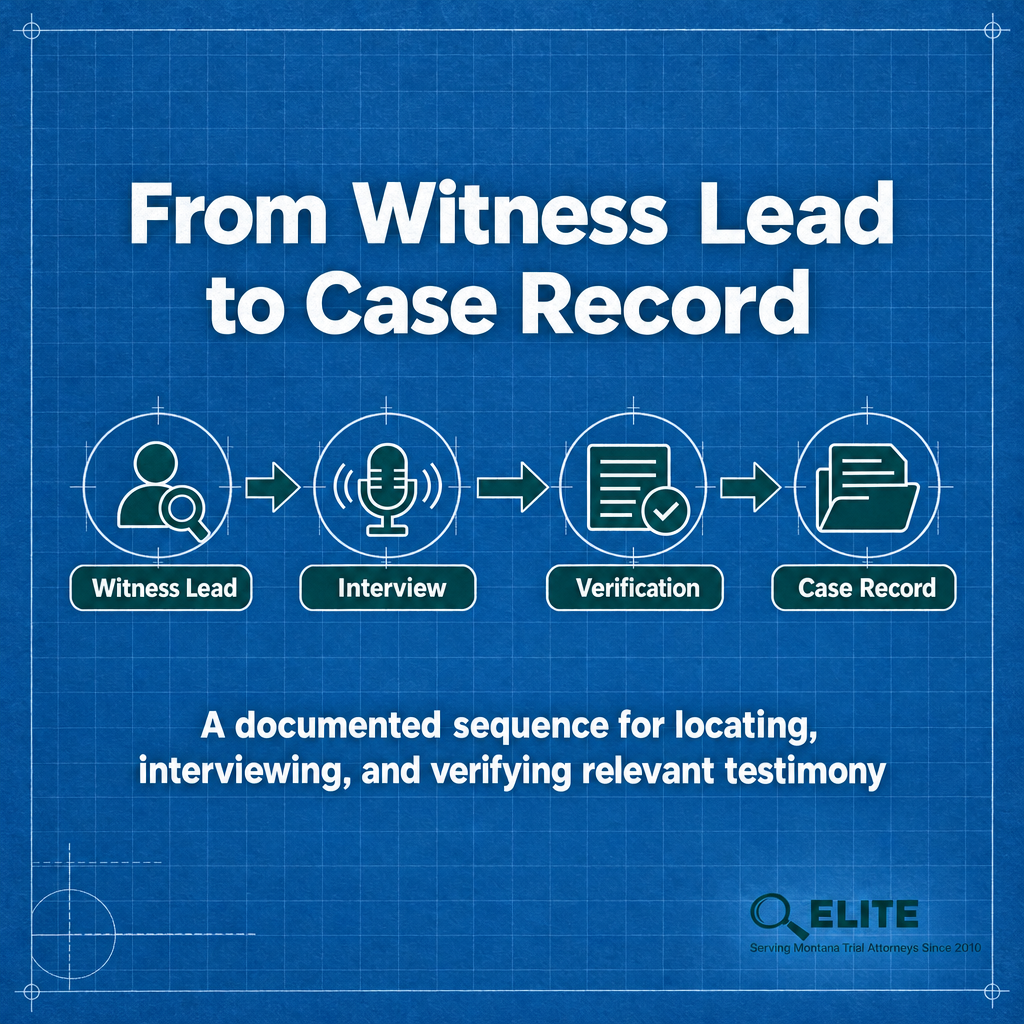
Witness locating is useful when a person may hold relevant information but has not been reached through ordinary attorney investigation. The person might clarify a timeline, describe an observation, explain a relationship, identify another witness, or point counsel toward records that deserve review.
Before assigning the work, the defense team should define the witness’s likely knowledge, gather known identifiers, preserve existing contact details, and give the investigator a focused interview objective. Relevant identifiers may include a full or partial name, former address, employer, phone number, social media account, vehicle description, or connection to another person in the case.
A professional interview should use lawful, respectful contact and careful documentation. Counsel should decide how interview information fits discovery, disclosure, privilege, admissibility, and trial strategy. Our team can help organize factual information for attorney review, while the attorney determines how it may be used in the defense.
Finding people who may hold relevant information
Witness locating works best when the investigator receives enough detail to distinguish the correct person from others with similar names or backgrounds. The assignment should identify why the witness matters, what is already known, and any geographic or deadline concerns. That preparation reduces wasted effort and helps protect the accuracy of later contact and reporting.
Planning interviews that produce usable investigative notes
An interview objective should identify the subjects to cover without dictating an expected answer. We recommend recording the date, method of contact, participants, material statements, apparent inconsistencies, additional names, and records mentioned. Counsel can then evaluate the notes with a clearer understanding of what was directly observed, what was recalled, and what needs corroboration.
When are surveillance, background checks, or asset searches relevant to a defense case?
Surveillance should be considered only when observed activity bears directly on a defined legal question and can be conducted lawfully. A vague request may create unnecessary cost and produce unfocused material, while a narrow assignment can specify the subject, relevant conduct, location, time period, and reporting needs.
Background checks may help identify relevant history, relationships, professional information, or inconsistencies that require attorney review and independent verification. Asset searches may also be relevant to a broader legal investigation, but counsel should define the purpose, scope, and permissible sources before the work begins.
- Define the issue: State the factual question the defense team needs to examine.
- Identify the information gap: Specify what is missing and what is already documented.
- Select the method: Choose witness work, surveillance, background research, asset research, or another lawful method.
- Set boundaries: Confirm geographic limits, time period, contact rules, privacy concerns, and budget expectations.
- Establish reporting and review: Agree on updates, documentation, deliverables, and counsel’s review process.
Matching surveillance to a specific factual issue
Surveillance has value when the attorney can explain how observed activity may confirm, challenge, or clarify a particular fact. The investigator should understand the permitted scope and reporting format before field work begins. Counsel should also expect observations to be described accurately, without conclusions that exceed what the investigator actually saw or documented.
Using background and asset research as lead-development tools
Background and asset research can reveal relationships, locations, professional connections, or records that guide additional inquiry. These findings should remain subject to independent verification and legal review, particularly where records may be incomplete or information may be associated with the wrong person. A defined purpose keeps the assignment focused and defensible.
What can a social media investigation show before a criminal trial?
A social media investigation may examine publicly available profiles, posts, images, videos, connections, stated locations, and apparent timing when those items relate to the attorney’s defined question. The work may help identify potential witnesses, relationships, timeline leads, public statements, changes in accounts, or facts that warrant further investigation.
Online material can be incomplete, altered, misidentified, restricted, or taken out of context. We treat findings as leads until identity, timing, source, and relevance are verified. A screenshot or search result may guide follow-up work, but counsel should decide whether additional preservation, corroboration, disclosure analysis, or admissibility review is appropriate.
Social media search pricing depends on the number of subjects, platforms, identifiers, time period, search depth, documentation needs, and level of reporting requested. Attorneys should discuss fees and deliverables directly with the investigator rather than assume a standard price applies to every criminal defense assignment.
Typical search scope and possible leads
A defined search may focus on one person, several connected accounts, a particular date range, or public content tied to a stated location or event. Potential leads can include an apparent relationship, a possible witness, a public statement, or a change in account activity. Each lead should be documented with enough context for counsel to assess its value.
Why online information requires verification
Account names and images do not always establish identity, and online timestamps may not prove when an image or statement was created. Content can also be deleted, reposted, edited, or viewed without its surrounding context. We recommend treating online findings as starting points until independent facts support the source, timing, meaning, and connection to the case.
How should attorneys evaluate an investigator before assigning pretrial work?
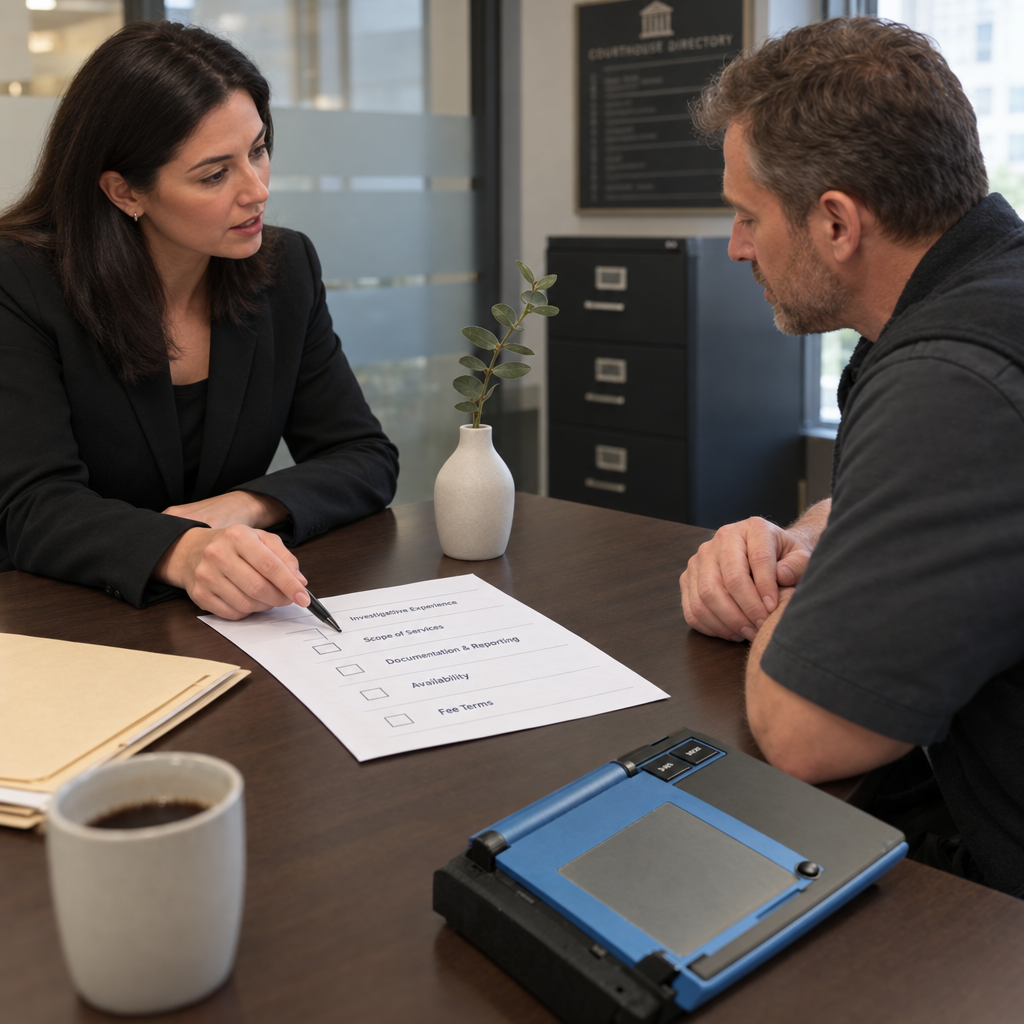
Attorneys should evaluate relevant legal-investigation experience, responsiveness, defined scope, lawful methods, documentation practices, expected deliverables, availability, and fee structure before assigning pretrial work. Ask how the investigator handles witness contact, online findings, surveillance notes, source preservation, progress updates, and requests that expand beyond the original assignment.
Local knowledge can help with witness locating, interviews, records research, and field work in Billings and surrounding Montana areas. Service coverage may also extend into Wyoming, so counsel should confirm the specific location, timing, and assignment requirements during the initial conversation.
Elite Investigations provides professional investigative services for attorneys and individuals, including legal investigations, witness locating and interviews, surveillance investigations, background checks, social media investigations, asset searches, and civil and criminal investigations. Our team brings more than 24 years of experience in law enforcement and private investigation, and we focus on professional investigative support without promising a particular legal outcome.
Questions about scope, reporting, and lawful methods
Ask what the investigator will do, what the investigator will not do, how findings will be documented, and when counsel will receive updates. It is also useful to confirm how the investigator will identify sources, preserve relevant material, handle unexpected leads, and communicate when a request may expand the original scope or fee arrangement.
Local coverage for Billings, Montana, and Wyoming
For a Billings, Montana, assignment, local familiarity may support practical work involving nearby witnesses, locations, and records. Elite Investigations serves Billings, surrounding Montana areas, and Wyoming according to the business’s service scope. Attorneys should provide the location and deadline early so the team can discuss whether the requested work fits the assignment.
What should the defense team do after selecting an investigative path?
After selecting a method, the defense team should prepare a concise assignment brief covering the case posture, factual question, known names and identifiers, geographic scope, deadline, relevant records, prohibited assumptions, and desired report format. This gives the investigator a clear starting point and helps counsel avoid paying for broad work that does not answer the central question.
Before work begins, confirm the engagement scope, communication contact, fee arrangement, expected updates, and any limits on surveillance, online research, or witness contact. After receiving findings, counsel should review relevance, reliability, corroboration, discovery obligations, admissibility questions, and consistency with the defense strategy.
Attorneys in Billings, Montana, surrounding areas, or Wyoming can contact Elite Investigations at 406-698-8911 or info@elitepimt.com to discuss the investigative question and determine whether the requested service fits the assignment.
Preparing the assignment brief
A useful brief separates known facts from assumptions and identifies the specific gap the investigator should address. Include the relevant names, locations, records, deadline, preferred communication method, and desired deliverable. Counsel should also state any contact limits or legal concerns so the investigator can plan lawful, focused work from the outset.
Reviewing findings with counsel before acting
Investigative findings should be reviewed by counsel before the defense team changes strategy or relies on them in court. The review should test reliability, corroboration, context, disclosure duties, admissibility questions, and consistency with the overall defense theory. This step helps distinguish useful information from an unverified lead.
Frequently Asked Questions
What does a legal investigator do for a criminal defense attorney before trial?
A legal investigator supports lawful fact-finding by locating and interviewing witnesses, researching backgrounds and social media, conducting defined surveillance, and pursuing other case-related leads under the attorney’s direction. The investigator does not replace law enforcement, prosecutors, or the court.
When should a defense attorney hire a private investigator before trial?
Consider investigative support when the team needs to locate a witness, test a timeline, clarify relationships, verify an online lead, investigate observed activity, or address a factual gap the legal team cannot efficiently resolve alone. The assignment should begin with a defined question and deadline.
What is included in a social media investigation for a criminal defense case?
Possible work includes reviewing publicly available profiles, posts, images, videos, connections, stated locations, and apparent timing tied to a defined question. Scope varies, and findings require verification of identity, context, timing, source, and relevance.
Does Elite Investigations serve Billings, Montana, and Wyoming?
The business context identifies Billings, Montana, surrounding areas, and Wyoming within its service coverage. Confirm the specific location, deadline, and investigative need during the initial conversation.
How does an attorney get started with Elite Investigations?
Contact Elite Investigations at 406-698-8911 or info@elitepimt.com with the general investigative question, location, timing, and preferred service. Share only information appropriate for an initial inquiry until engagement and confidentiality arrangements are addressed.