When a witness is difficult to locate, a reported connection needs checking, or an asset lead appears online, online investigative research can organize publicly available clues and point to the next lawful investigative step. It can reveal useful context, but it rarely proves identity, ownership, intent, or the truth of an allegation by itself.
What question is online investigative research meant to answer?
Online investigative research works best when it begins with a defined legal or personal question. An attorney may need to assess whether a witness has a possible location, an individual may need a reported background detail checked, or a law firm may need to examine an apparent business connection. A digital search can help organize names, locations, professional histories, social media activity, business affiliations, and other publicly visible connections.
At Elite Investigations, we treat online findings as leads and context within a broader investigation. Research may support legal investigations, witness locating and interviews, background investigations, asset-search leads, or surveillance planning for attorneys and clients in Billings, Montana, and surrounding areas. The value comes from connecting relevant information to a specific question, not from collecting unrelated internet results.
The legal or personal question behind the search
The question should determine what sources we review and what documentation the assignment requires. “Where might this witness be reached?” calls for a different approach than “Does this person appear connected to this business?”
A clear question also helps separate relevant information from speculation and gives the attorney or client a practical standard for deciding whether further investigation is justified.
When a digital lead is useful
A digital lead is useful when it narrows a search, identifies a possible connection, or suggests where an investigator should look next. A public profile, professional listing, or business reference may help guide an interview, records check, asset search, or surveillance assignment.
The lead remains a starting point until appropriate methods confirm the person, location, ownership, timing, or relationship involved.
What can online research reveal about a person, business, or connection?
Online research can reveal publicly visible profiles, archived pages, business registrations, professional listings, published records, property-related clues, possible aliases, and visible associations. Depending on the question, these sources may help develop leads for witness locating, background investigations, due diligence, contractor or vendor vetting, corporate investigations, and asset searches.
We compare identifiers rather than relying on a single matching name. Names, usernames, photographs, dates, locations, employers, relatives, and business references can help reduce the chance of confusing two people with similar information. The process may also show where records conflict, which is itself useful when planning follow-up work.
Online information has firm limits. Deleted material may be unavailable, private accounts may reveal nothing, profiles may be inaccurate, and copied content may be attributed to the wrong person. Search engines can display outdated results, while public records may be incomplete. These limits mean a finding should be described precisely rather than presented as proof.
Public profiles and professional history
Public profiles and professional listings may show names, usernames, employers, education, stated locations, business roles, or dates associated with an online presence. Archived pages can add historical context when a current page has changed or disappeared.
Those details still require identity comparison. A matching name or photograph may suggest a connection, but it does not automatically establish that the account belongs to the subject or that the stated history is accurate.
Relationships, locations, and business links
Publicly visible associations can point to relatives, colleagues, companies, addresses, vehicles, events, or professional relationships worth checking. Business registrations and published listings may help develop due-diligence questions or identify a possible service corridor.
These connections are leads, not conclusions. Relationships may be outdated, informal, copied from another source, or unrelated to the matter under review.
Information that needs independent verification
Identity, current location, account control, asset ownership, authorship, intent, and the truth of an allegation generally require independent verification. An online result can suggest what to confirm through records, interviews, direct contact, observation, or another lawful investigative method.
We recommend preserving the source and explaining exactly what it shows, what it does not show, and what follow-up would support or disprove the interpretation.
Which online findings require fieldwork, interviews, or surveillance?

Online research should lead to fieldwork when a digital clue affects a legal decision but does not answer the underlying question. A potential address, employer, relative, vehicle, or business connection can guide witness locating, an interview, a records check, in-person observation, surveillance, or direct contact.
For example, a profile may identify a possible employer, but an investigator may still need to confirm whether the person works there and whether the information is current. A business listing may suggest an ownership or affiliation lead, but appropriate records and investigative follow-up may be needed before anyone relies on it.
Local conditions can affect that follow-up. Billings and surrounding Montana communities connect with regional businesses, rural addresses, and travel routes that may extend into Wyoming. Elite Investigations serves Billings, Montana, and Wyoming, so attorneys and clients can discuss online leads alongside broader investigation services without assuming a particular case result.
Moving from a digital lead to a verified fact
Verification means testing the lead against reliable identifiers and a method suited to the question. An interview may clarify a relationship, records may address ownership, and surveillance may address present activity or location when legally appropriate.
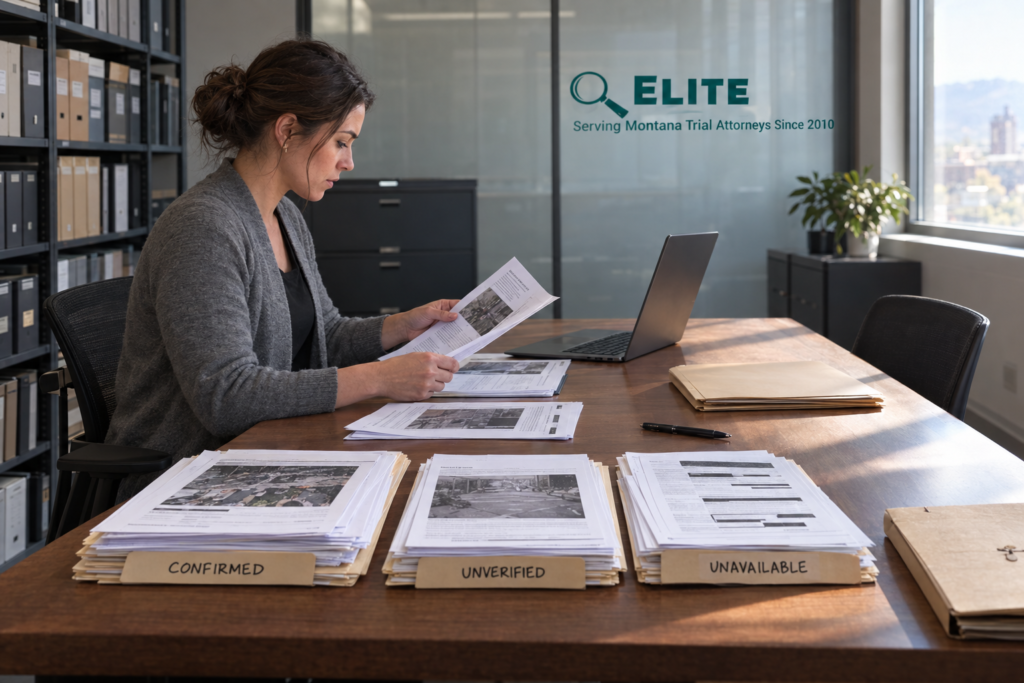
We distinguish observed information from interpretation and from an unconfirmed lead. That distinction helps counsel decide what can be included in a case assessment and what requires additional work.
How local coverage affects follow-up
Local coverage can help an investigator assess addresses, businesses, service corridors, and travel between locations in Montana and Wyoming. Geography matters when an online lead involves more than one community or requires coordinated follow-up.
During an initial discussion, we recommend identifying every relevant location rather than assuming the search is limited to Billings. The location list can affect scope, timing, documentation, and the choice of investigative methods.
How should an attorney document and assess online investigative findings?
Attorneys should document the research question, source trail, timing, identifiers, and limits before treating an online finding as useful case information. Screenshots, URLs, profile identifiers, archived material, search notes, and source context help preserve how a result appeared and why it seemed relevant.
A written record should separate what was directly observed from an investigator’s interpretation and from a lead that still needs confirmation through interviews, records, surveillance, or other investigative work. The following sequence gives a practical structure:
- Define the question: State the decision the research should support and the result that would be useful.
- Record identifiers: Note reliable names, usernames, photographs, employers, locations, dates, and known relationships.
- Capture the source: Preserve the URL, screenshot, profile identifier, archived material, date, and time when available.
- Cross-check the finding: Compare relevant details across independent public sources and flag conflicts.
- Assess relevance: Explain how the information relates to the legal or personal question without overstating its meaning.
- Recommend follow-up: Identify whether interviews, records, witness locating, asset searches, direct contact, or surveillance could confirm or disprove the lead.
A practical review and documentation sequence
Start with the question, then preserve the source before evaluating its meaning. Record what the page says, who or what it appears to concern, when it was captured, and which details support the match.
Next, compare the finding with other identifiers and write a separate note for any interpretation. This creates a clear trail for counsel, the client, and the investigator if the assignment expands.
Questions that prevent overstatement
Ask: What decision will this research support? Which identifiers are reliable? What would confirm or disprove the lead? Is the information current, and could it belong to someone else? These questions help prevent a public result from being treated as established fact.
Also agree on how updates will be communicated and when the investigator should recommend interviews, records work, surveillance, or another investigative step.
What can online private investigation services cost, and what affects scope?
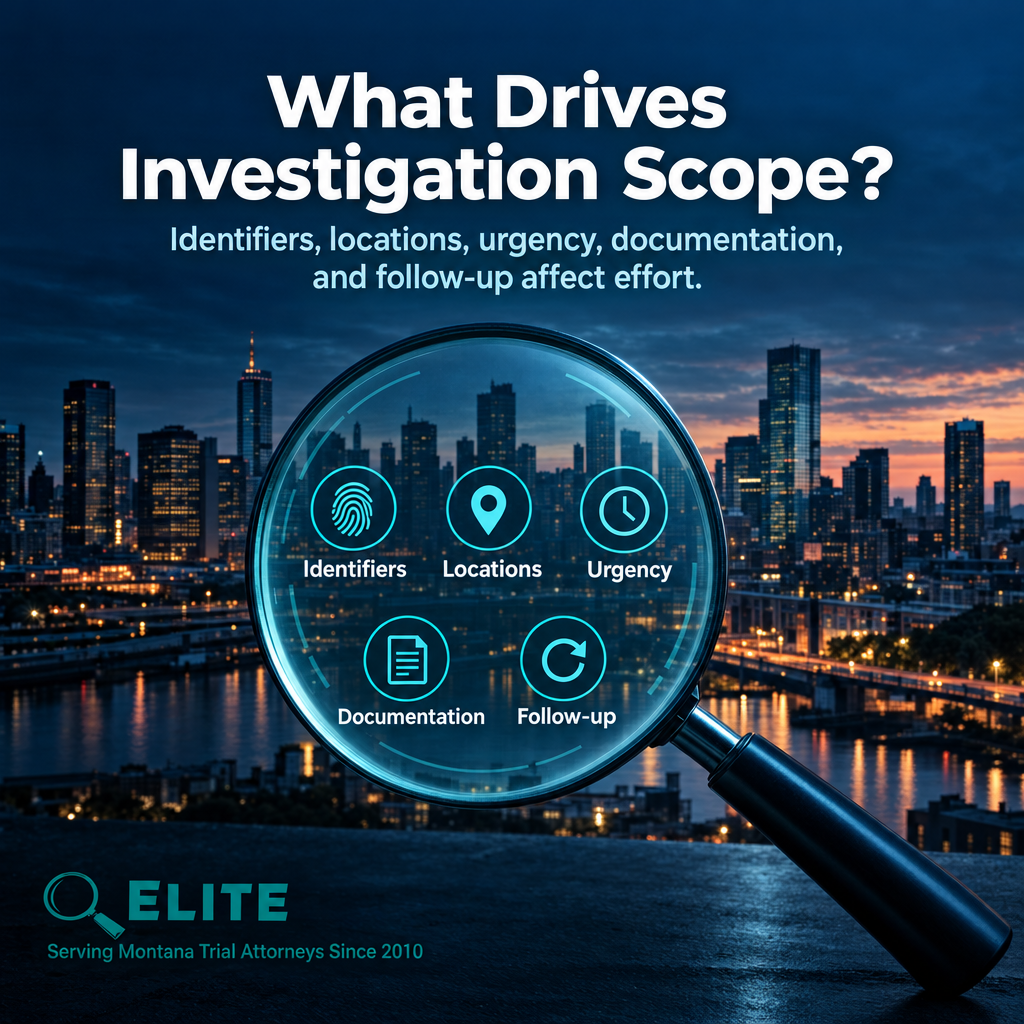
Online or social media investigation pricing depends on the requested scope, available identifiers, geographic needs, documentation requirements, urgency, and whether follow-up services are needed. A focused profile or identity review is different from a broader background investigation, witness search, asset-search lead, or assignment that expands into interviews and surveillance.
Before work begins, ask whether the assignment includes a written summary, source documentation, progress updates, an agreed research scope, and a clear process for approving additional work. These details help attorneys and individuals compare proposals based on the work product rather than on a generic internet price.
To discuss an appropriate starting scope, contact Elite Investigations with the research question, relevant location, available names or identifiers, deadline, and desired outcome.
Why pricing depends on the assignment
Research becomes more involved when identifiers are limited, locations span Montana and Wyoming, records need careful source documentation, or the initial lead requires fieldwork. Urgency and the level of reporting requested can also affect the assignment.
We recommend defining the first question narrowly while identifying possible follow-up needs. That approach keeps the initial work focused without assuming that online research alone will resolve the matter.
What to include in a request for a quote
Include the subject’s known name, usernames, locations, dates, relevant business or employer information, the question you need answered, and the deadline. Explain whether you need source captures, a written summary, periodic updates, or a recommendation for follow-up.
Share only information relevant to the initial assessment. A focused request allows our team to discuss scope without promising a result that the available information cannot support.
When should you contact a private investigator in Montana or Wyoming?
Contact a private investigator when online information may affect litigation strategy, a witness cannot be reached, identity remains uncertain, a lead involves multiple locations, public information conflicts, or the matter requires observation or direct interviews. These escalation points indicate that the question has moved beyond simple online review.
Elite Investigations provides attorney support and investigation services in Billings, Montana, and Wyoming. Our broader services include legal investigations, witness locating and interviews, background checks, asset searches, surveillance, and social media investigations. We also handle corporate investigations, due diligence, contractor and vendor vetting, and related investigative assignments.
To discuss the research question, location, and information already available, contact Elite Investigations for a focused initial conversation.
Signs that online research alone is insufficient
Online research alone is insufficient when the information is disputed, outdated, connected to several possible identities, or important to a legal decision. It is also insufficient when you need a current location, confirmed ownership, a direct account from a witness, or observation of present conduct.
At that point, ask what lawful follow-up method fits the question and how the findings will be documented for review.
A focused first conversation
Begin by explaining what you need to know, why the question matters, where the relevant people or businesses may be located, and what information you already have. Attorneys, law firms, and individuals should also identify the deadline and the decision the research will support.
Our team can then discuss whether online investigative research is an appropriate first step or whether it should be paired with legal investigations, interviews, background work, asset searches, or surveillance.
Frequently Asked Questions
What is included in online investigative research?
Online investigative research may include reviewing publicly available websites, social media profiles, professional listings, business connections, possible aliases, location clues, and other relevant sources. The assignment should define the question, identifiers, documentation needs, and whether follow-up investigation is included.
How much do online or social media investigation services cost?
No universal price applies because cost depends on scope, identifiers, urgency, documentation, geography, and whether the research leads to interviews, records work, or surveillance. Request a scope discussion from Elite Investigations rather than relying on a generic online price.
Can online research prove that a person owns an asset or operates an account?
Public information may create an asset or account lead, but it often cannot establish identity, ownership, control, or current status on its own. Independent verification and legally appropriate investigative methods may be required.
How do I get started with online investigative research?
Contact Elite Investigations through the contact page and share the core question, relevant location, names or identifiers, known facts, deadline, and decision the research needs to support.