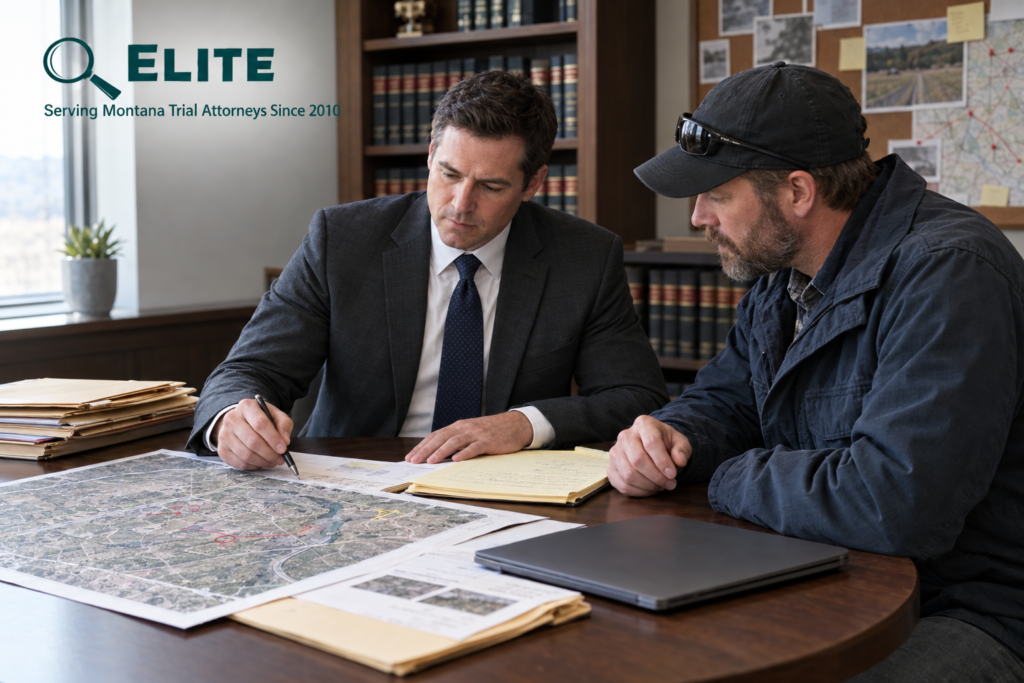
Attorneys should bring a private investigator into a case when disputed facts, missing witnesses, incomplete background information, or uncertain assets could affect discovery, settlement, or trial preparation. Early support gives counsel time to define the question, collect lawful information, and address gaps before a deposition, mediation, hearing, or trial deadline.
What case warning signs justify bringing in a private investigator early?
Disputed facts and hard-to-verify information are strong reasons to involve an investigator before the case reaches a critical deadline. A focused assignment may include witness interviews, surveillance, social media investigations, background checks, or asset searches, depending on the legal question.
Early investigative support can preserve time for follow-up. Online private investigation services may help organize intake materials, exchange documents, coordinate research, and provide status updates, while some assignments still require lawful fieldwork. We recommend defining the legal issue, known facts, jurisdiction, and desired deliverable instead of asking an investigator to “find everything.”
Facts that documents cannot verify
Documents may show what was recorded, but they cannot always establish who observed an event, whether a witness can clarify a timeline, or what a person is doing now. Witness locating and interviews can identify relevant knowledge, while surveillance or background research may test a specific factual question through lawful methods.
Deadlines that make delay costly
A deposition, mediation, hearing, or trial date can leave little time to locate a witness, assess a lead, or arrange fieldwork. We recommend contacting an investigator as soon as counsel sees a factual gap, because the assignment may require scheduling interviews, reviewing records, or coordinating work across Montana or Wyoming.
Which investigative service fits the legal question you need answered?
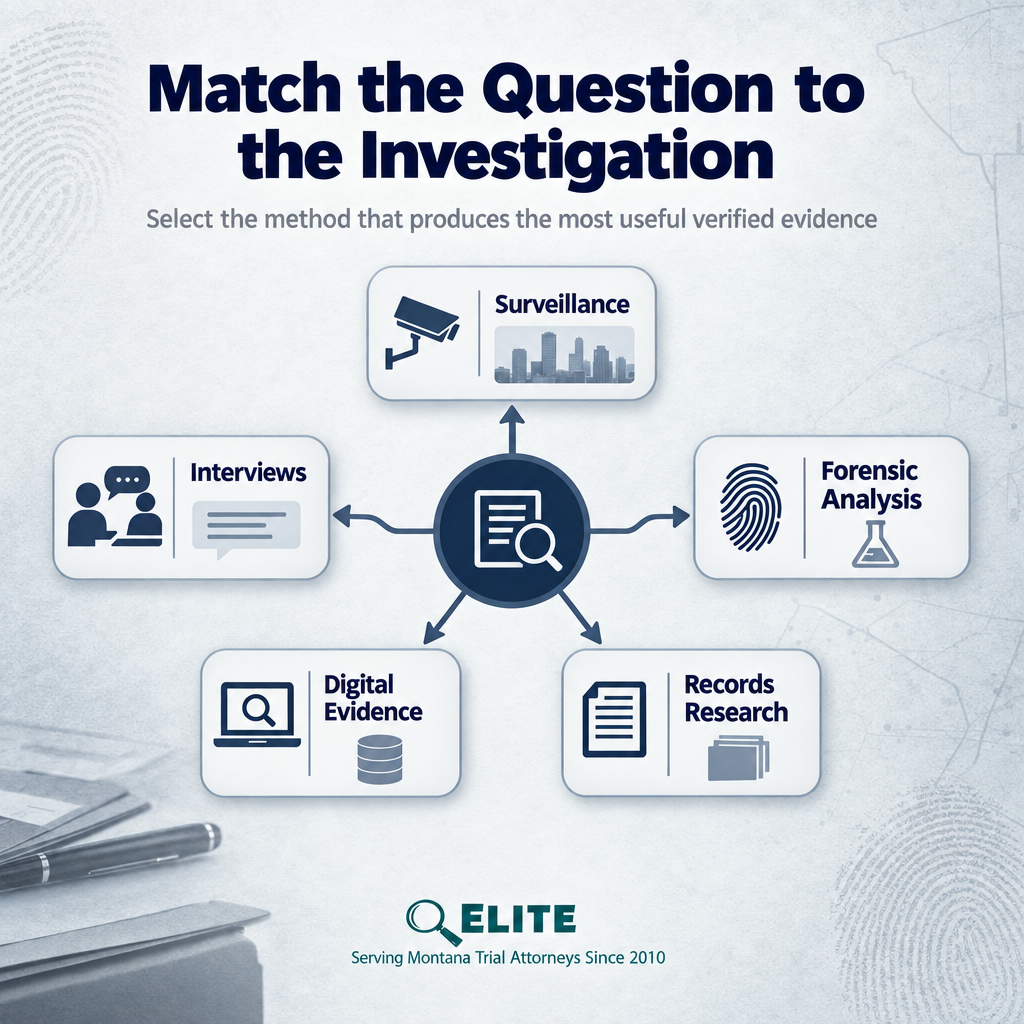
The right investigative service depends on the question counsel needs answered, not simply on the amount of information available. Witness locating and interviews fit questions about who has relevant knowledge; surveillance fits defined questions about observable activity; background checks support identity and history review; and social media investigations focus on publicly available online information.
Asset searches and bank account searches may help attorneys investigate financial questions, subject to lawful access, applicable restrictions, and a defined scope. Civil investigations and criminal investigations also benefit from a clear objective and a report that separates documented facts from leads requiring further verification.
- Witness question: Who has relevant knowledge and how can counsel contact them?
- Activity question: What observable conduct needs lawful documentation?
- Background question: What identity or history details require verification?
- Financial question: What lawful asset information may support the case?
Each assignment should produce a usable deliverable, such as an interview summary, research report, activity log, or documented lead. That focus helps counsel decide what to pursue and prevents time from being spent on information unrelated to the case strategy.
Locating and assessing witnesses
Witness locating and interviews help counsel identify relevant people, confirm contact details, and understand what a witness may know before deposition or trial preparation. We recommend giving the investigator names, aliases, prior addresses, known employers, relationships, and any reason the witness may be difficult to reach so the search begins with a defined lead.
Checking digital, personal, and financial facts
Background checks and social media investigations can help identify publicly available information, timelines, relationships, or inconsistencies that merit follow-up. Asset searches and bank account searches require particular care because the investigator must stay within lawful access and the agreed assignment boundaries.
What should an attorney include in an online investigation intake request?
A useful intake request gives the investigator the legal issue, known facts, relevant people, locations, documents, disputed facts, and next deadline. Counsel should also identify whether the assignment involves witness interviews, surveillance, background checks, social media research, asset searches, or a combination of services.
Before sending materials, separate confirmed facts from assumptions and label information that requires careful handling or restricted distribution. A clear intake lets the investigator assess feasibility, identify missing information, set priorities, and discuss whether online research, field investigation, or both are appropriate.
The case facts and legal issue
State what counsel needs to establish, challenge, or clarify, then list names, aliases, contact information, relevant locations, and documents already reviewed. Explain which facts are confirmed, which are disputed, and which points remain assumptions so the investigator can test the right issue rather than follow an unfocused lead.
The deadline, geography, and requested deliverable
Include the next deposition, mediation, hearing, filing, or trial deadline, along with the jurisdictions and locations that may affect the work. Specify whether counsel needs an interview summary, research report, activity log, documented lead, or another defined output, and identify how updates should be communicated.
How can investigative findings strengthen discovery and witness preparation?
Investigative findings strengthen case preparation when counsel converts each verified lead into a specific discovery or witness-preparation task. A located witness may clarify contact information, relevant knowledge, relationships, or a timeline, helping counsel prepare focused deposition or trial questions.
Background checks and social media investigations may identify publicly available information that merits corroboration, such as an apparent inconsistency, relationship, location, or sequence of events. Surveillance can document observable conduct when the assignment has a defined question, lawful boundaries, appropriate locations, and clear reporting requirements.
We recommend reviewing reports with counsel and distinguishing direct observations from secondhand statements. Preserve source information, dates, locations, and stated limitations, then decide what requires additional confirmation before relying on it in discovery, negotiation, or court preparation.
Turning leads into preparation tasks
After receiving findings, counsel can match each item to a next step: contact a witness, request a document, prepare a deposition question, verify a timeline, or seek corroboration. This approach keeps the investigation connected to case strategy and helps the legal team identify which leads matter before spending additional time or resources.
Reviewing findings for reliability and legal use
Investigative material should be reviewed for its source, date, location, method, and limitations before counsel relies on it. Direct observations, public records, interview statements, and online information carry different verification needs, so we recommend preserving the underlying details and discussing admissibility or other legal-use questions with counsel.
When do online private investigation services require local field support?

Online intake and research can organize records, public information, witness leads, and communications, but interviews, surveillance, service-area visits, and certain fact checks may require local investigative work. Geography, travel time, witness availability, seasonal conditions, and the location of relevant property or activity can all affect the assignment plan.
Elite Investigations provides professional investigative services to attorneys in Billings, Montana, surrounding areas, and Wyoming. Our services include legal investigations, witness locating and interviews, surveillance investigations, background checks, social media investigations, and asset searches. We review the assignment before confirming whether a particular location and scope fit the requested work.
Remote research versus on-the-ground work
Remote research is often a practical starting point for organizing information, reviewing public sources, and identifying possible witnesses or leads. On-the-ground work becomes more relevant when counsel needs an interview, lawful observation, a location-based fact check, or information that cannot be established through records and online sources alone.
Coverage across Montana and Wyoming
Billings is an important local context for attorneys seeking investigative support in Montana, while matters may also involve Bozeman, Butte, Missoula County, or locations across Wyoming. We recommend sharing the exact geography, relevant travel considerations, and deadline during intake so our team can assess the assignment before work begins.
How should an attorney choose and start working with an investigator?
Attorneys should choose an investigator based on legal-investigation experience, responsiveness, clear scope, defined deliverables, lawful methods, communication expectations, and geographic fit. Ask how the investigator will document interviews, research, surveillance observations, sources, dates, locations, and limitations so the final work supports case preparation.
Elite Investigations is positioned to support attorneys, law firms, and individuals with complex investigative matters. The business has more than 16 years in operation, and its investigative work is associated with extensive law-enforcement and private-investigation experience. Our team also brings more than 24 years of experience in law enforcement and private investigation to its work, including complex factual issues and witness interviews.
Questions to ask before authorizing work
Ask what legal question the proposed work will answer, which methods are appropriate, what deliverable you will receive, and how often updates will be provided. Confirm how the investigator handles new leads, documents limitations, protects sensitive information, and distinguishes direct observations from statements or publicly available research.
A focused next-step plan
Prepare a short intake with the case question, known facts, names, locations, deadline, relevant documents, and desired deliverable. To discuss the assignment with Elite Investigations, contact our team at +1-406-698-8911 or info@elitepimt.com, and include whether you need witness work, surveillance, background research, social media investigations, or asset searches.
Frequently Asked Questions
When should an attorney hire a private investigator for a case?
An attorney should consider an investigator when key facts are difficult to verify through documents, witnesses are hard to locate, surveillance or background research may clarify a disputed issue, or assets require lawful investigation. Early intake gives the investigator time to assess scope and timing before a major case deadline.
What are online private investigation services able to help with?
Online coordination and research may support witness locating, public-information and background research, social media investigations, asset-search leads, document review, and status communication. Interviews, surveillance, and location-based fact gathering may require lawful in-person investigative work.
What information should an attorney provide before requesting investigative support?
Provide the legal issue, known facts, names and aliases, relevant locations, available documents, disputed facts, upcoming deadlines, requested service, preferred deliverable, and any confidentiality or access limits. Separating confirmed facts from assumptions helps the investigator plan efficiently.
Does Elite Investigations serve attorneys in Billings, Montana, and Wyoming?
Yes. Elite Investigations provides professional investigative services to attorneys in Billings, Montana, surrounding areas, and Wyoming. Contact the firm to confirm whether the specific assignment, location, and requested scope fit the matter.