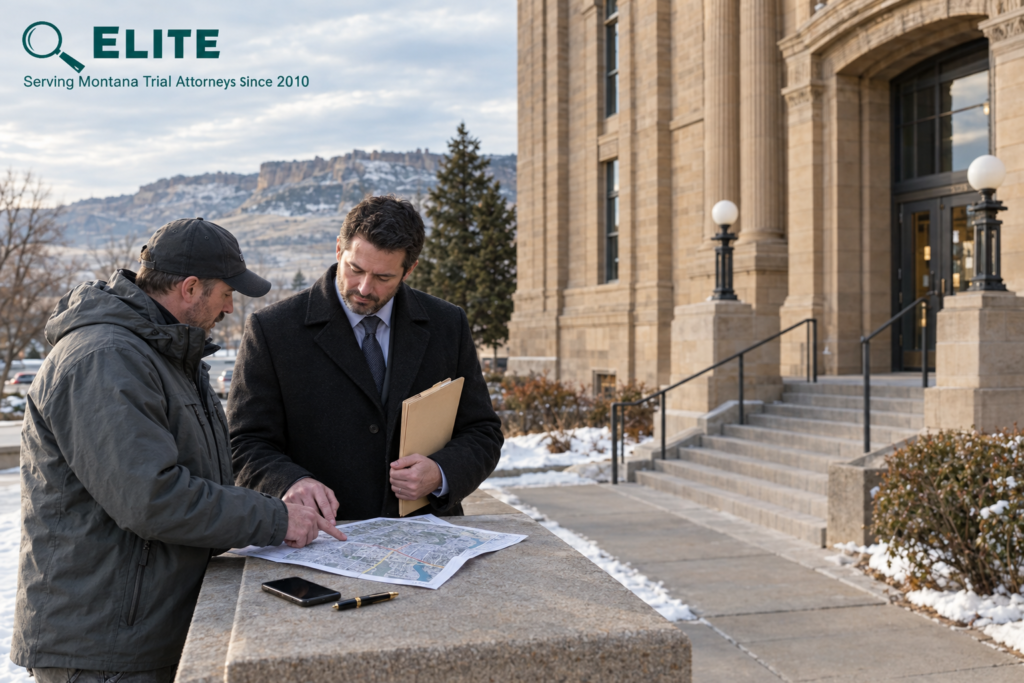
When a complex matter involves immediate danger, contact emergency services or law enforcement first; when the immediate risk has passed and the case still needs lawful fact gathering, a private investigator can support attorneys, law firms, and individuals with focused investigative work in Billings, Montana, surrounding areas, and Wyoming.
When should you contact a public officer, emergency services, or a private investigator?
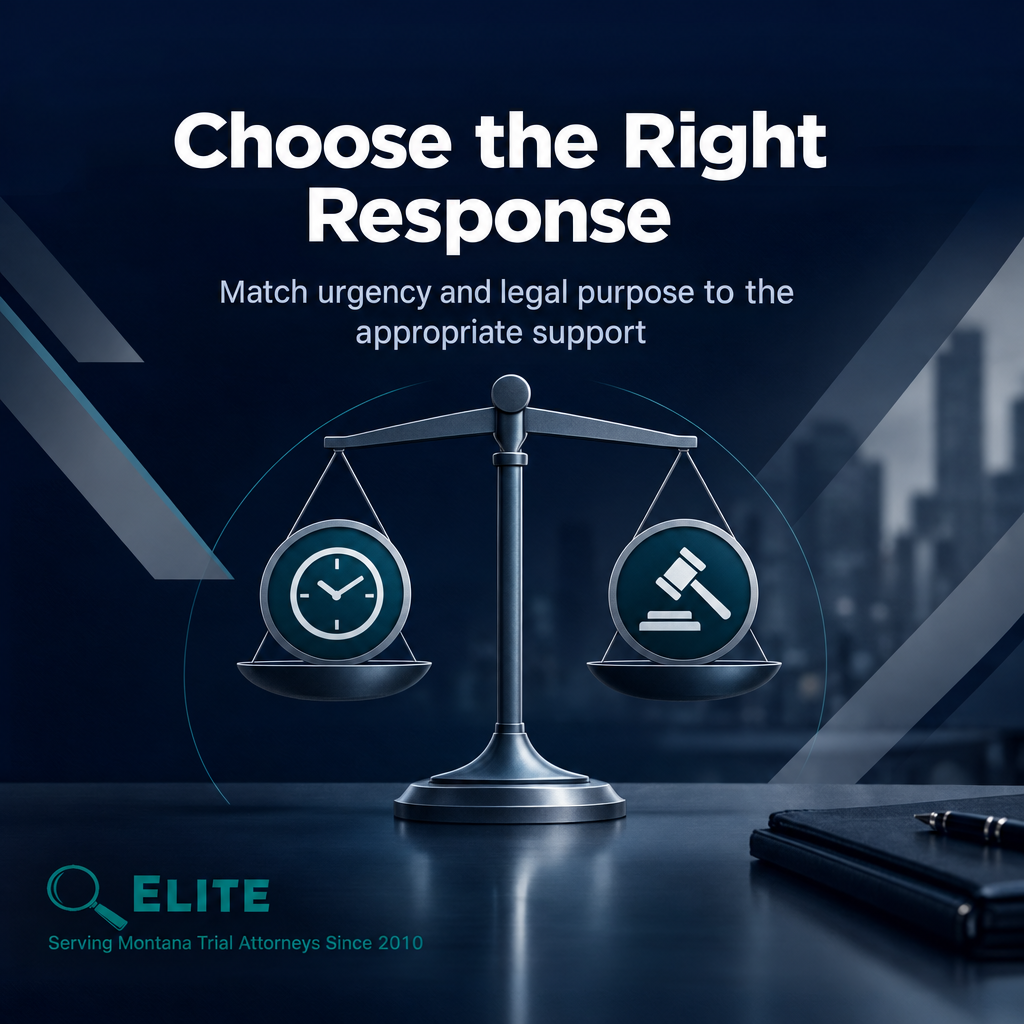
The central decision is whether the situation requires immediate protection, legal advice, or structured investigative support. Active threats, injuries, crimes in progress, and urgent safety concerns belong with emergency services or law enforcement. A private investigator is not a substitute for police, emergency responders, or an attorney, but may assist with lawful follow-up after the public response begins.
Immediate danger and active criminal emergencies
Immediate danger, an active crime, serious injury, or a threat to someone’s safety requires emergency services or law enforcement before any private investigative assignment. Move to a safe location, provide responders with clear facts, and preserve relevant information without placing yourself or others at further risk. A private investigator may later help organize lawful follow-up work once the emergency has been addressed.
Legal questions that require follow-up investigation
Follow-up investigation is appropriate when an attorney or client needs facts that public response alone may not develop, such as a witness location, documented interview, surveillance assignment, background research, or asset search. A simple decision check is useful: call emergency services for immediate danger, consult counsel for legal strategy and rights, and contact investigative support for an authorized fact-gathering objective.
What can a private investigator add after the public response begins?
A private investigator can give a legal team focused field support that differs from a public officer’s emergency or enforcement role. Elite Investigations provides legal investigations for attorneys in Billings and surrounding Montana areas, including Wyoming, and lists civil and criminal investigations among its services.
Depending on the lawful objective, investigative support may include witness locating and interviews, surveillance investigations, background checks, social media investigations, asset searches, and bank account searches. Before requesting work, define the people involved, known dates and locations, available documents, and the unresolved question. That preparation helps the investigator focus time on useful leads rather than broad, undefined searching.
Building facts for civil and criminal matters
Civil and criminal investigations often begin with one practical question: what fact is still missing, and how could it be verified lawfully? A witness may need to be located, an account clarified through an interview, activity documented through surveillance, or publicly available information reviewed through a social media investigation. The method should follow the question, not replace it.
Supporting attorneys with organized fieldwork
Attorneys benefit when investigative assignments have a clear scope, timeline, jurisdiction, and reporting expectation. Our team can work from the facts counsel or a client supplies, while the attorney remains responsible for legal advice, litigation strategy, privilege decisions, disclosure, and admissibility questions. This division keeps investigative work practical and legally informed.
How should you evaluate investigative support for a complex Billings case?
Evaluate an investigative firm by its relevant experience, responsiveness, geographic coverage, communication practices, documentation methods, and ability to coordinate with counsel. Ask how the proposed work will remain lawful, protect privacy, document contacts, and preserve information that may later matter to an attorney or court.
Before assigning work, use this checklist to turn a general concern into a manageable request:
- Objective: State the specific question the investigation should answer.
- Jurisdiction: Identify the cities, counties, states, and travel needs involved.
- Urgency: Explain deadlines, changing circumstances, and any safety concerns.
- Deliverables: Agree on the expected report, photographs, timelines, interview notes, or other documentation.
- Authorization: Confirm that the requested activity has a lawful purpose and proper authority.
- Communication: Establish who receives updates and when material developments should be reported.
Questions to ask before retaining a firm
Ask whether the firm handles the type of legal investigation involved, serves the necessary locations, and can explain its proposed scope in plain language. Also discuss communication frequency, expected documentation, travel considerations, and what information the client should provide. Clear answers at the beginning reduce confusion when facts or priorities change.
Privacy, legality, and evidence-handling precautions
Privacy and lawful access should guide every assignment, especially background, social media, asset, and bank account searches. Ask how contacts, observations, and publicly available information will be documented and preserved. A private investigator supports fact development, while counsel should address privilege, disclosure duties, litigation strategy, and whether information may be admissible.
Which investigative method fits the question your case must answer?
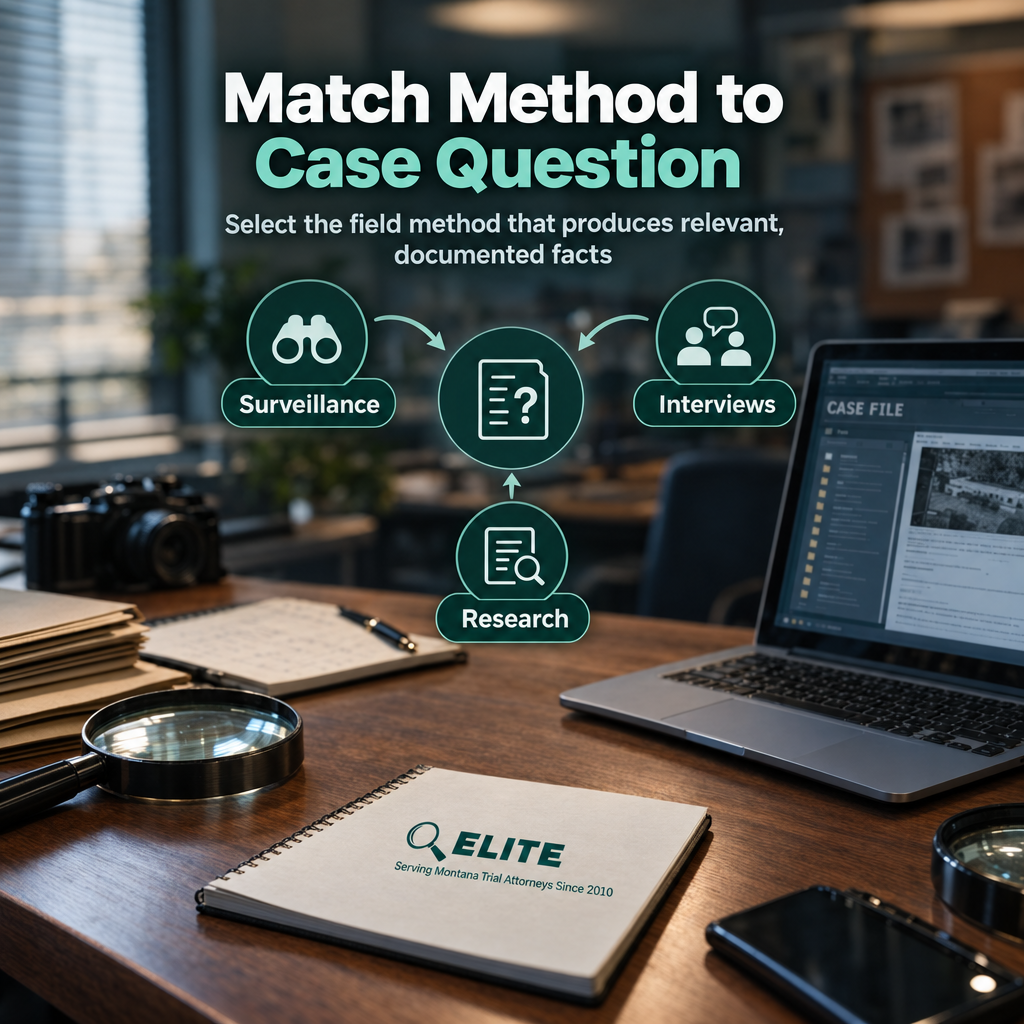
The right method depends on the fact the case needs to establish. Locating a person may call for witness locating; clarifying an account may require an interview; verifying activity may call for surveillance; and reviewing publicly available online information may support a social media investigation.
Locating and interviewing witnesses
Witness locating is useful when a relevant person has moved, changed contact information, or has not responded to ordinary outreach. An interview assignment should identify the known connection, relevant dates, desired topics, and any limits counsel wants observed. The resulting documentation should distinguish what the witness said from what the investigator independently observed.
Surveillance, background, and social media research
Surveillance can help document activity when the assignment has a defined purpose and lawful scope, while background checks can organize permitted information about an identified subject. Social media search scope and cost depend on platforms, time period, subject identifiers, geographic focus, urgency, and reporting format. We recommend discussing each parameter before requesting a quote rather than relying on an unsupported flat price.
Asset and financial information searches
Asset searches and bank account searches should begin with a legitimate legal purpose and realistic expectations about information that can be obtained lawfully. The assignment may require identifying the subject accurately, defining the relevant jurisdiction, and explaining how the information will support the matter. Results should be treated as investigative information for counsel’s review, not as a replacement for legal analysis.
How can attorneys and clients prepare a useful investigative request?
Start with a precise question, collect known identifiers and records, identify urgency and jurisdiction, discuss lawful methods, agree on reporting needs, and set communication points. Useful materials may include names, aliases, addresses, phone numbers, relevant dates, case documents, photographs, known vehicles, and prior contact details.
Information to gather before the consultation
Bring only information that is relevant and authorized for the assignment, including a concise timeline and the names of people or entities connected to the question. Verify that the investigative question is specific, the requested activity is authorized, and the service area is clear. An organized packet helps the consultation focus on practical next steps.
A practical assignment workflow
Our recommended workflow is to define the objective, review the known facts, confirm jurisdiction and urgency, select an appropriate method, and agree on the report format before fieldwork begins. Set a checkpoint after the scope is confirmed and another when the first material findings are available. The final report expectation should be understood before the assignment starts.
When should you seek investigative help in Billings, Montana, or Wyoming?
Seek investigative support when distance, changing jurisdictions, or the need to contact people across Montana and Wyoming makes case development difficult for the legal team to manage directly. Elite Investigations provides professional investigation services to attorneys in Billings, Montana, surrounding areas, and Wyoming.
Service-area planning matters because travel distance, local contacts, timing, and jurisdiction can affect the assignment. Elite Investigations has been featured on All About Billings and Trailhead Talks discussing investigations and cases, and is a member of the Billings Chamber of Commerce and the Fraud and Abuse Law Institute. These details offer useful context when a client is evaluating local professional support.
Service-area and jurisdiction questions
Confirm where the relevant people, records, vehicles, or property are located and whether the assignment may cross from Montana into Wyoming. Tell the investigator about expected travel, deadlines, and any existing law-enforcement or legal involvement. Elite Investigations can discuss whether the requested work fits its service area and the stated case objective.
Starting a focused consultation
Attorneys and individuals can contact Elite Investigations through the website or call +1 406-698-8911 to discuss the investigative question, location, urgency, and appropriate next step. Share the objective and known facts without assuming a particular method; our team can help clarify the scope of a lawful investigative request.
Frequently Asked Questions
Should I call law enforcement or a private investigator during a criminal emergency?
Immediate danger, an active crime, injuries, or an urgent safety threat require emergency services or law enforcement. A private investigator may support lawful follow-up work after the immediate public response, subject to the assignment and applicable law.
What does a private investigator do for attorneys in Billings, Montana?
A private investigator may support legal investigations, witness locating and interviews, surveillance investigations, background checks, social media investigations, asset searches, and civil or criminal investigative work. The exact scope depends on the case question, authorization, location, and reporting needs.
Do you serve Billings, Montana, surrounding areas, and Wyoming?
Yes. Elite Investigations provides professional investigation services to attorneys in Billings, Montana, surrounding areas, and Wyoming. Confirm the location, travel needs, and assignment details during initial contact.
How do I get started with an investigative assignment?
Contact Elite Investigations through the website or at +1 406-698-8911 with the case objective, known identifiers, relevant dates, location, urgency, and desired outcome. The consultation can clarify whether the requested support fits the case.
Is private investigative support appropriate for individuals as well as law firms?
Yes, individuals and legal teams may seek investigative services for legal matters. Explain the issue and intended use of the information so the appropriate service and lawful scope can be discussed.