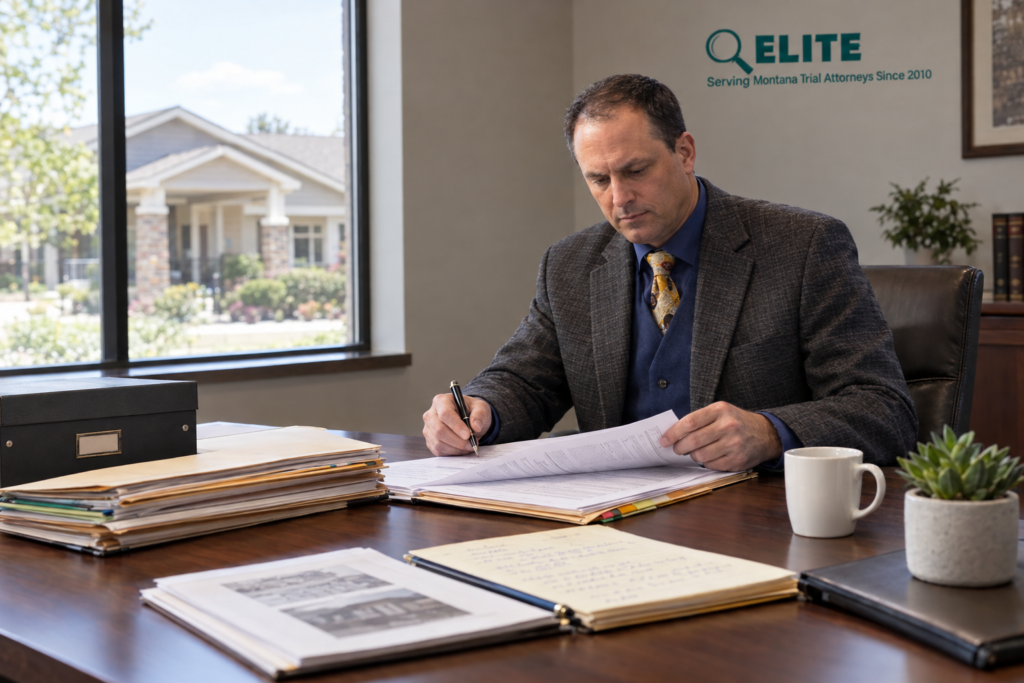
Checking nursing home violations starts with official inspection and complaint information, but a useful investigation must connect those findings to the resident, dates, witnesses, records, and alleged harm. We recommend treating online records as a starting point, then testing each important fact against the case file and preserving evidence that may not appear in a public report.
When should an attorney investigate nursing home violations beyond an online search?
Begin with a client interview, available medical and facility records, inspection or complaint records, incident reports, and a secure case file. Initial triage generally takes one to three hours and has moderate difficulty because records may be incomplete, inconsistent, or written for regulatory purposes rather than for litigation. Online inspection findings can show what regulators identified, but they may not establish notice, chronology, witness credibility, or the conduct of a specific employee.
We recommend document review alone when the record clearly answers the relevant question and no material dispute remains. Targeted witness work may be appropriate when a key observer, former employee, or family member can clarify notice or timing. A broader nursing home investigation deserves consideration when the account is urgent, records conflict, important evidence may disappear, or the case requires facts that public records cannot provide.
Define the suspected harm and legal question
State the suspected abuse, neglect, unsafe condition, or other violation and identify the precise legal question the investigation must answer. For example, the question may concern when a facility learned of a risk, who received a report, whether an incident occurred, or how staff responded. A defined question keeps the review focused and prevents prior citations from becoming a substitute for evidence about the client’s experience.
Set the review scope, timeline, and difficulty
Set the relevant date range, facility location, resident information, known staff names, and records already available before assigning additional work. The initial review is moderately difficult when documents use different dates, omit key events, or describe conduct broadly. Decide whether the next step is records follow-up, witness locating, interviews, or a broader investigation based on the missing fact and the need to preserve evidence.
How can you check nursing home violations and compare them with the case file?

Use appropriate government or official sources to locate publicly available inspection, deficiency, complaint, enforcement, and facility information, while recognizing that no public search should be treated as complete without verification. Search by the facility’s current and former names when available, record the source and access date, and retain copies or permitted exports of relevant pages and documents.
Compare each finding with medical records, incident reports, staffing information, discharge paperwork, care plans, medication records, photographs, correspondence, and internal facility policies when available. Record the violation date, cited conduct, involved unit or staff role, corrective action, and connection to the alleged injury. A prior citation may indicate a regulatory history, but it does not by itself prove the current claim, the same conduct, or the involvement of a particular employee.
Verification checkpoint: Every material allegation should have a source, a date, and a stated connection to the client’s experience. If one of those pieces is missing, label the point as an open question rather than presenting it as an established fact.
Collect regulatory and facility records
Start with official inspection and complaint information, then request or gather facility records through the proper legal process when public material does not answer the question. Preserve the original documents, identify the issuing body or facility source, and note whether the record describes an allegation, an observation, a deficiency, corrective action, or a final determination. That distinction affects how the record should be used.
Build a date-by-date incident timeline
Place admissions, symptoms, incidents, reports, treatment, transfers, family contacts, inspections, and facility responses on one chronological worksheet. For every entry, identify the source and whether the date is exact, estimated, or disputed. A timeline exposes gaps quickly and helps counsel decide whether a missing document, witness interview, or records request could resolve the conflict.
What investigation steps reveal facts that nursing home records may omit?
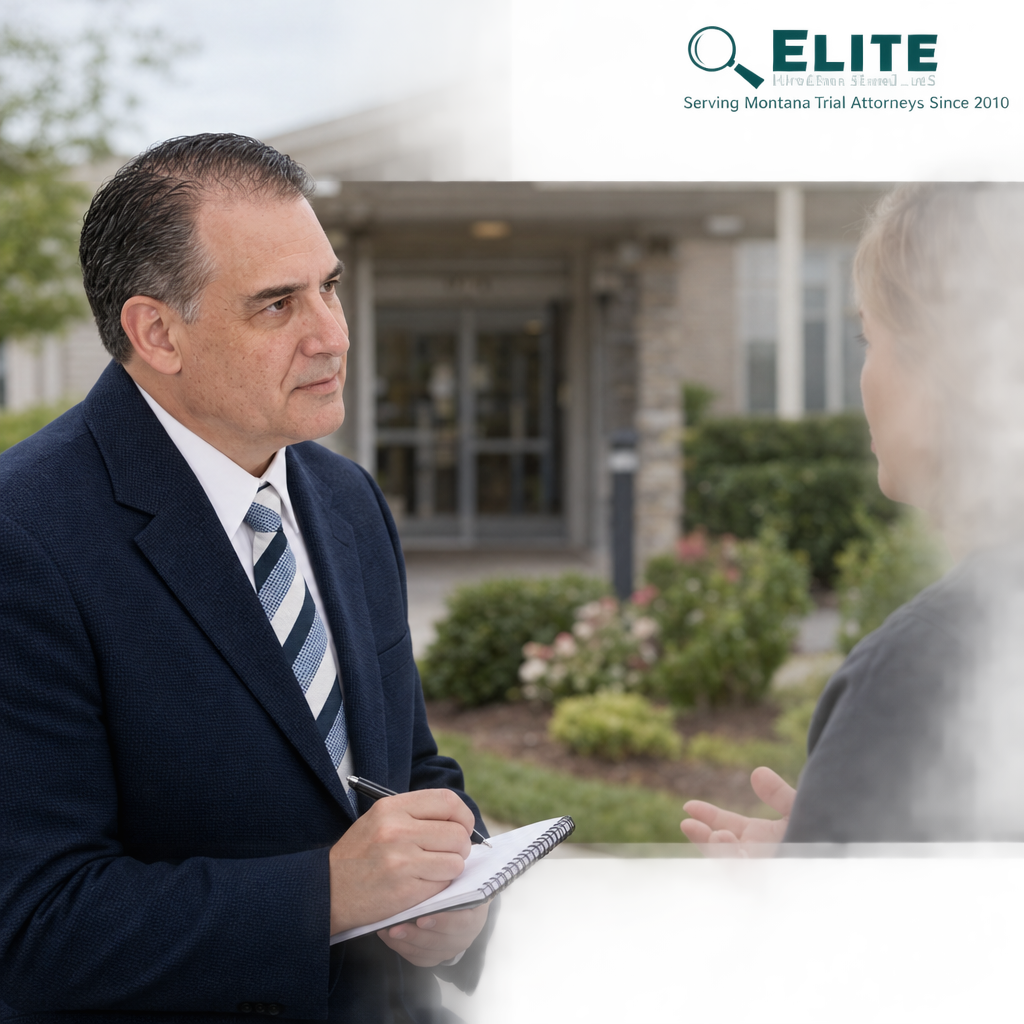
Witness work can reveal who observed an event, when the observation occurred, who received notice, and how the facility responded. Former employees, roommates, visitors, first responders, contractors, and family members may each hold a different part of the chronology. Our team supports defined legal investigative needs through witness locating and interviews, legal investigations, surveillance investigations, and background checks.
- Identify the unanswered fact: State exactly what the current records do not establish, such as notice, identity, timing, or response. Confirm that the question relates to the assignment.
- Name the likely source: Identify the person, document, message, photograph, or location most likely to answer that question. Rank sources by relevance and availability.
- Confirm contact information: Verify identity and lawful contact details before outreach. Distinguish a reliable lead from an unconfirmed name or address.
- Plan a lawful interview: Set the purpose, scope, privacy precautions, and attorney direction before speaking with a witness. Avoid pressure, harassment, trespass, or contact that could compromise the investigation.
- Document the statement and supporting records: Record what the witness says, when the interview occurred, and which documents or photographs support or limit the account. Preserve originals and collection details.
- Report contradictions separately from confirmed facts: Identify conflicting statements, unresolved questions, and reasonable leads without forcing them into one narrative.
Locate and interview witnesses
Witness locating is useful when a key observer cannot be reached through ordinary contact information or has moved since the incident. Interviews should focus on personal observations, dates, communications, facility responses, and the limits of the witness’s memory. We recommend recording the source of each assertion and separating firsthand knowledge from what the person heard from someone else.
Preserve relevant evidence lawfully
Retain original documents, record collection dates, and preserve relevant messages, photographs, and file versions without altering their contents. Follow attorney direction and applicable law when collecting private information, contacting residents, or handling confidential records. Investigative conduct should protect privacy and avoid actions that could compromise admissibility, chain of custody, or the reliability of the evidence.
Check staff and facility history within the assignment
Background research can help verify identity, employment history, or another defined issue, but it should remain tied to the legal question and authorized scope. A facility or staff history may provide leads, yet it does not establish that a particular person caused the client’s harm. We recommend documenting the source, date, and limits of each historical fact.
How should an attorney decide whether to assign interviews, surveillance, or records follow-up?
Match the investigative method to the unanswered question. Use records follow-up when dates or documents conflict, witness locating when a key observer cannot be reached, interviews when testimony needs clarification, surveillance only when the legal question supports it, and background research when identity or employment history requires verification.
An investigator should receive a written assignment stating the suspected violation, relevant dates, known names, requested records, interview goals, jurisdiction, deadlines, and reporting format. The assignment should also address privacy, trespass, harassment, represented parties, confidential information, and contact with vulnerable residents. The investigator should follow applicable law and attorney direction rather than improvise beyond the authorized purpose.
Assignment checkpoint: The work is ready to begin when another professional can understand what fact must be established, what evidence may answer it, and what work falls outside scope. This protects the case from unfocused activity and makes later reporting easier to evaluate.
Match the method to the unanswered question
Choose records work when the dispute concerns what was written, entered, amended, or sent. Choose interviews when a person’s observations or communications need clarification, and choose witness locating when that person cannot be found. Surveillance requires a separate, specific legal purpose and should never be treated as a default step. Background checks should address a defined identity or history question.
Set boundaries for lawful, focused fieldwork
Write down who may be contacted, what information may be collected, where fieldwork may occur, and when the assignment ends. Do not trespass, harass, pressure vulnerable residents, misuse confidential information, or contact represented parties contrary to attorney direction. A clear scope also identifies urgent issues, reporting deadlines, and the records or photographs that must be preserved.
How do you troubleshoot gaps and conflicting accounts in a nursing home investigation?
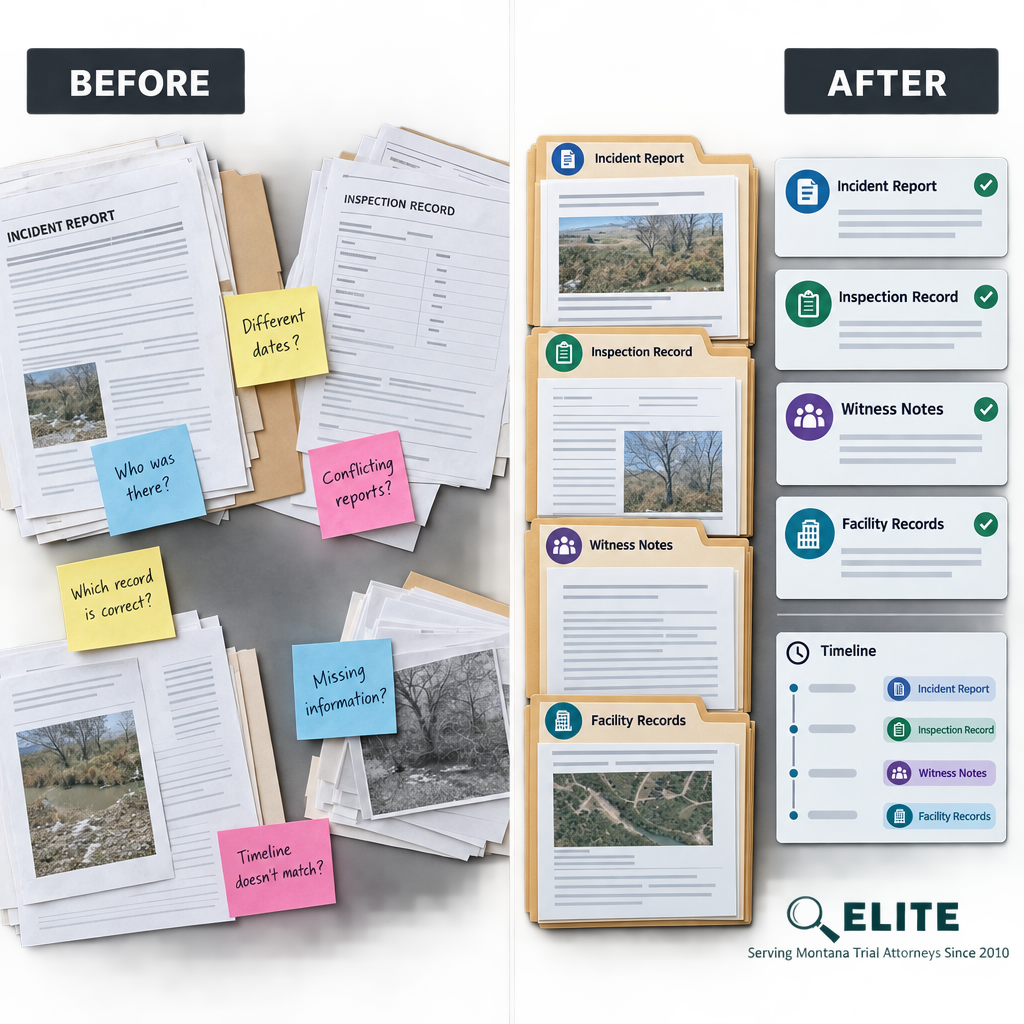
Separate confirmed facts, disputed statements, reasonable leads, and unresolved questions whenever records are incomplete or accounts differ. Broad inspection language may require the underlying facility records; an omitted event may require a proper records request; conflicting witness times may require a revised timeline; and conduct outside the published inspection period may require different evidence.
Practical follow-up can include requesting missing records through the proper legal process, comparing metadata and document versions when available, revisiting the chronology, and identifying independent corroboration. If a former employee cannot be located, preserve the search steps and assess whether another witness or record can answer the same question. Do not force a single narrative before the evidence supports it.
Resolve inconsistent dates and statements
Compare each version with contemporaneous records such as treatment entries, medication records, messages, photographs, discharge paperwork, and incident reports. Mark exact dates separately from estimates and ask whether a witness is describing the event, a later report, or information received from another person. Report the conflict plainly, then identify the evidence that could confirm or narrow it.
Escalate urgent evidence or safety concerns
Immediate safety concerns or suspected ongoing abuse require prompt legal and appropriate protective action. Preserve evidence without delaying emergency response or interfering with steps intended to protect a resident. Counsel should determine the proper reporting and legal course, while the investigative file records what was known, when it was learned, and what preservation steps followed.
How can an attorney start a nursing home investigation with Elite Investigations?
Start with a focused consultation covering the client’s account, suspected violation, facility location, relevant dates, known witnesses, records already collected, and the specific decision the investigation must support. This gives our team a practical starting point and helps determine whether targeted records follow-up, witness work, or another defined service fits the matter.
Elite Investigations is a Billings, Montana firm serving Montana and Wyoming. Our confirmed services include nursing home abuse investigations, witness locating and interviews, legal investigations, surveillance investigations, and background checks. We work with attorneys, law firms, and individuals seeking investigative support, with the assignment and scope defined before work begins.
Before fieldwork starts, agree on authorized contacts, status-update timing, deliverables, urgent issues, and the process for transmitting records. Attorneys or individuals can contact Elite Investigations at +1 406-698-8911 or info@elitepimt.com to discuss whether focused nursing home investigative support fits the case.
Prepare the intake materials
Gather the suspected violation, facility name and location, relevant dates, resident information, known witnesses, inspection or complaint records, medical and facility documents, photographs, messages, and the unanswered legal question. Identify what has already been requested and any immediate preservation concern. A concise intake packet helps us understand the assignment without assuming facts that the records do not establish.
Define communication and reporting expectations
Confirm who may authorize work, which contacts are permitted, how urgent information should be transmitted, and what the final report should contain. Set expectations for source identification, interview notes, document handling, unresolved questions, and status updates before the investigation begins. Attorneys can also review our nursing home abuse investigation services when deciding what support may fit the matter.
Frequently Asked Questions
Can an online nursing home violation search prove that abuse or neglect occurred?
Inspection and complaint records can identify regulatory findings, but they may not prove every element of an individual claim. Compare them with client documents, witness accounts, chronology, and evidence tied to the specific resident before concluding.
When should an attorney hire a private investigator for a nursing home investigation?
Consider investigative support when key witnesses are difficult to locate, accounts conflict, facility records leave material gaps, notice or chronology is disputed, or the case requires lawful interviews and evidence-preservation work beyond online research. The assignment should identify the fact the investigator must establish.
What can Elite Investigations do in a nursing home investigation?
Elite Investigations provides nursing home abuse investigation services and can support legal matters through witness locating and interviews, legal investigations, surveillance investigations, and background checks. The assignment and scope should be defined before work begins.
Does Elite Investigations serve attorneys in Billings, Montana, and Wyoming?
Elite Investigations primarily serves attorneys in Billings, Montana, surrounding areas, and Wyoming. Contact the firm to discuss the location, assignment scope, and availability for a specific nursing home investigation.
How do I get started with a nursing home investigation?
Prepare the suspected violation, relevant dates, facility details, known witnesses, available records, and unanswered legal question. Then contact Elite Investigations by phone at +1 406-698-8911 or by email at info@elitepimt.com for an initial discussion.